
Do you often experience leg pain? Have you always been curious about what it is and where it comes from? There is often a stigma surrounding the term “sciatica” and what it is that falls into this category. When it comes to sciatic pain, there are often two commonly misconstrued ideas. Number one is the type of pain that is felt, and number two is the region in which it is felt. In this blog, we will break down what sciatic pain truly is, where it is experienced, what is the true cause of this, and what it is that the doctors here at Integrated Health Solutions can do to assist you.
In short, sciatic pain (or sciatica) is simply an irritation of the sciatic nerve, the longest and thickest nerve in the body that runs from the bottom of your spine through your lower extremities. This can be caused by a plethora of irritations, including: muscle tension, disc, protrusion or irritation, and even arthritic degeneration. Most nerves in the body have a highly sensitive sensory response system. A sensory response system is what generates a feeling in the body. While this is most often a pain response, it can also be felt in terms of things like touch, ticklish, warmth, etc. When we talk of the term sciatica, or a pain and irritation within the sciatic nerve, there is a specific type of pain that we are referencing. This pain can typically be described as a burning, tingling or sharp and intense pain. Nowadays, it seems that any slight irritation or discomfort felt within the leg is often branded with the term sciatica. This is simply no longer the case.
People often misconstrue things like muscle tension, body aches, and even general daily compensation as “sciatica”. We reserve the term sciatica as a diagnostic tool for an intense pain caused by an irritation of the sciatic nerve. This is represented typically by a numbness or a tingling and burning pain that usually begins within the lower back centrally close to the spine, and radiates through the hips and into the leg.The reason this distinction is important, is because individuals who think they have a sciatic problem often seek treatment or perform perform at home therapeutic mechanisms targeting this exact condition. If you do not have an irritation of the sciatic nerve, the therapeutic remedies typically given for this condition will not assist you a large majority of the time. In fact, they can sometimes even make you worse. That is why firstly, it is extremely important to seek medical attention and receive an intentional diagnosis from a medical professional who can confirm or deny your sciatica.
The most common problem that we see patients in the office presenting with that they believe is sciatica, is often a tight and irritated outside portion of their leg. While this discomfort can sometimes manifest in a rather sharp presentation, this is not sciatica. Firstly, the sciatic nerve in the leg only runs and irritates the space along the backside of the leg. If you are experiencing a sole discomfort along the outer portion of the leg, it cannot possibly be the sciatic nerve creating the irritation. A large majority of the time, this problem is simply an irritation of the IT, or iliotibial, band. Secondly, now that we have given that distinction, it is also important to note that just because you have irritation along the backside of the leg does not mean that you then MUST have sciatica. There are also several musculoskeletal and vascular problems that can also manifest along the backside of the leg. This is why it is extremely important to seek medical attention, and receive a proper diagnosis from someone who understands and can make these distinctions.
The most common cause for sciatic nerve irritation is typically a disk problem within your lumbar spine. Now you might think this typically means herniation right off the bat, but that is also not the case. There are several different diagnoses or individual problems that a disc can obtain. There is something as simple as disc irritation, there is disc protrusion, there is disc displacement, and there is even nerve root irritation that has nothing to do with the disk. The reason this is typically the case is because when there is a problematic occurrence or disturbance in the lumbar spine and the disc spaces related to the sciatic nerve, this irritation is noted throughout the entirety of the sciatic nerve. That is why when true sciatica is noted, it is noted in the back, glutes, thigh, calf, and even the foot. Being the longest nerve in the body, the sciatic nerve runs through, not only the lower back and the pelvis, but the entirety of the leg into the foot. This can manifest and present with things like a pins-and-needles sensation, a fiery burning like sensation or simply a sharp, stabbing and intense pain.
There are also additional causes of sciatica within the musculoskeletal system. The most common of these is piriformis syndrome. The piriformis is a muscle within the posterior pelvis that runs very closely to the sciatic nerve. When this muscle is over stressed and overworked, the residual tension and restriction can irritate the sciatic nerve, representing a similar sensation. This is why it is critical to have a proper diagnosis. The treatment of a disc irritation, or a nerve root impingement, is vastly different from that of piriformis syndrome or a muscle restriction. Taking the treatment for one of these diagnoses and applying it to the opposite diagnosis, can be detrimental and not only prolong your injury, but actually make you feel worse.
Now that we’ve spent enough time talking about the doom and gloom of the dreaded “sciatica”, let’s add a positive spin to this. Each and every one of the doctors here at IHS, are specifically trained and educated to not only diagnose the exact cause of your pain, but treat it with the world class modalities that our office can provide. While it is true that some cases of sciatica are chronic or intense enough that it can require more severe medical attention, a large majority of the time this problem can be cured by your local handy-dandy chiropractor. The doctors here at IHS use a tried and true treatment protocol designed and catered specifically to you and your individual condition. This protocol consists of medical acupuncture known as dry needling, soft tissue manual therapy, targeted chiropractic manipulation, and specific dynamic and functional rehab rehabilitation. Well, that may sound like a mouthful, or a tad aggressive when you are experiencing the intense pain of sciatica, it is a proven method to assist with this condition, and we have helped thousands with this exact complaint. Now let’s break down what these individual treatments are and why it is that they are beneficial to this issue.
Dry needling, otherwise known as medical acupuncture, is a modern take on an ancient Chinese therapeutic measure. Dry needling is the use of microfilaments to target and effectively release muscle tension and restriction, while simultaneously affecting the work and communication of the sympathetic nervous system. The reason this is so helpful for sciatica is because when your body experiences an intense pain, like that of sciatica, the first response is often muscle guarding. This is a self-defense mechanism the body uses, and an attempt to prevent the problem from getting worse. While this may be helpful in an acute sense and may actually prevent the problem from worsening to a detrimental level, it also dampens the body’ s ability to get better. When your body becomes stiff and rigid with prolonged muscle tension, there is a decreased amount of movement that you can perform, which then simultaneously prevents your body from truly healing. Dry needling is used to specifically target the muscular restriction that is created as a pain response, and allow the healing process to begin. It can also directly target and assist with your appreciation of that pain. This means that it does not only allow your body to begin the healing process, but it actually makes you feel better almost immediately.
The next treatment used by our doctors is called soft tissue manual therapy. Now this may sound like a lot of very general words used together to name a single treatment, but that is only because there are a plethora of ways to affect the muscle tissue. While dry needling is the most important way we affect the soft tissue, the circulatory response is crucial in the process of healing. By using something like a Graston tool, hand, pressure, or even motion assisted release, we further improve the amount of release the muscle muscles receive, while simultaneously improving the circulatory response of blood flow to the area. Soft tissue is imperative after something like dry, needling, to ensure that the muscle fibers are lengthened and placed in the properly oriented position. This continues and enhances the healing process, while also preventing the muscles from immediately re-creating that spastic reaction. Now this is not a one time fix, or immediate removal of muscle tension. As long as the initial cause for concern (i.e. disc injury, piriformis impingement, etc) is still present, the defense mechanism will re-create the muscle tension. That is why as helpful as these treatments are, it is imperative that you embark on a full treatment plan to receive the complete alleviation of this problem.
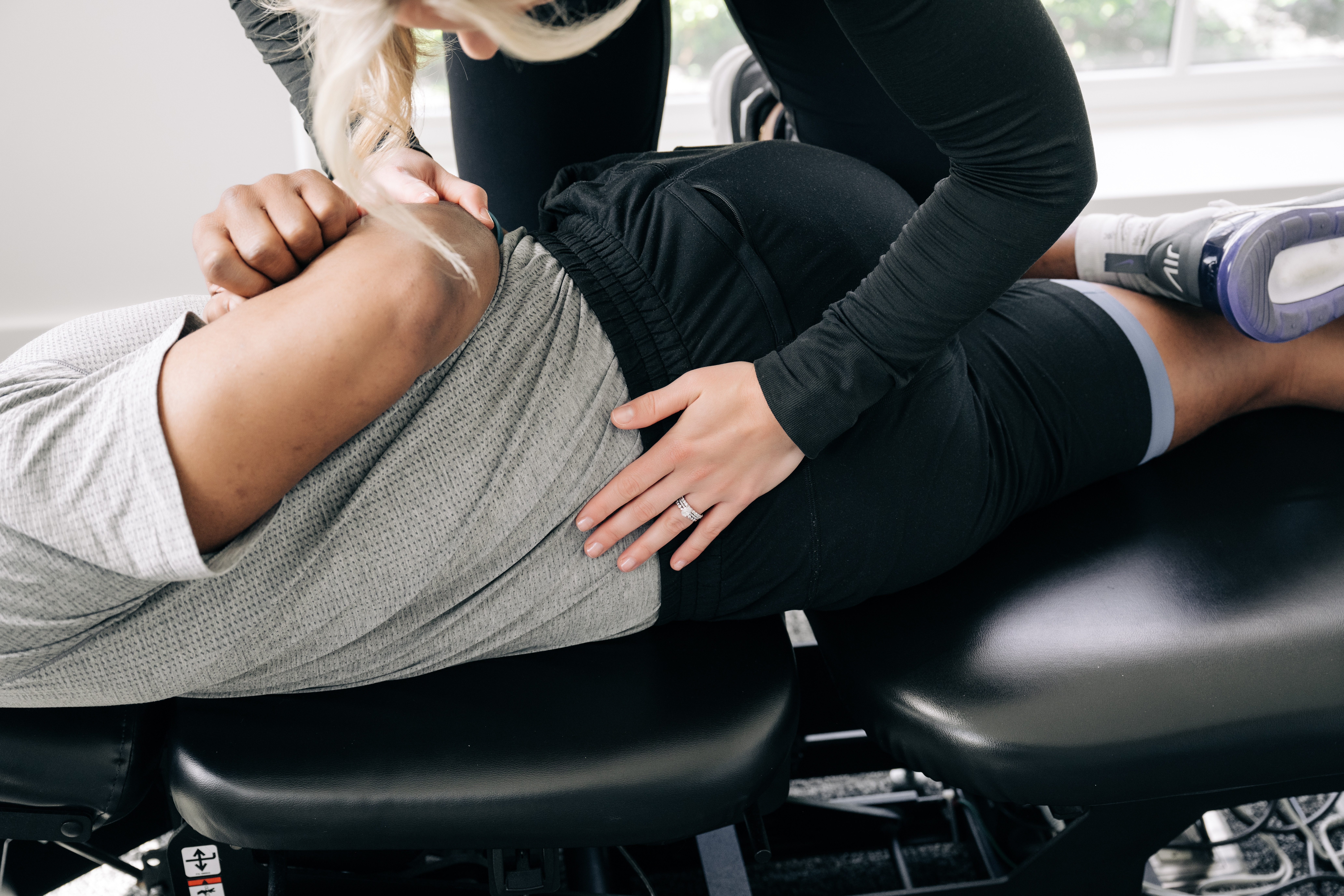
The third treatment used by our clinicians is the chiropractic adjustment. The chiropractic adjustment involves a direct and targeted hand pressure to specific joints of the body, to remove restriction and allow proper mobility, as well as mitigate the body’s pain response. This is the most common treatment performed by chiropractors around the world, and is likely what you see on your social media feeds. While this may be what chiropractors are most commonly associated with, it is not by a longshot, the most important tool that a chiropractor can use. It is also important to know that while chiropractic adjustments are beneficial for the body and a crucial element of the healing response, a targeted chiropractic adjustment to the lumbar spine when a disc herniation or explicit injury is present, is often not only unpleasant, but not recommended. It is typical that the first series of treatments you receive are more targeted to the soft tissue and your ergonomic and functional benefit, without the directed adjustment. That is not to say that an adjustment in other regions of the spine could potentially be harmful as well, but if a lumbar disc problem or nerve root impingement is found, the chiropractic adjustment is typically not the immediate solution.
The fourth and final, and arguably most crucial treatment, is the dynamic and functional rehabilitation. The reason this is arguably the most crucial portion of the treatment, is because when a patient is presented in our office, we only have a snapshot of time, face-to-face with them. It is imperative that these patients understand what it is that they do outside of the office that is potentially harmful, or beneficial to their condition. While some may think of rehab rehabilitation in terms of physical therapy, muscle strengthening, or even just simple stretching, it is a much more complex issue than that. There is a targeted protocol for sciatic pain involving not only ergonomic and functional correction of your day-to-day activities, but also positional exercise exercises that can resort disc spaces and intern alleviate the irritation on the sciatic nerve. This is extremely important because the other three treatments the doctors will do are going to alleviate the pain and discomfort of the condition in the short term, but it does not fix the issue if the things you do outside of the clinic re-create the same injury. Each patient that presents to our clinic with sciatica, automatically becomes a crucial and integral part of the treatment plan. You have to be willing to be educated and make the proper and corresponding lifestyle changes that will assist in the timely healing of this condition.
Hopefully this shed some light on not only what sciatica is, but what it is that can cause this condition as well as what it is that the doctors here at IHS can do to correct and alleviate it. In summary, sciatica, and it’s truest sense, is an irritation of the sciatic nerve at some point from its origin at the nerve root of the lumbar spine, extending through the lower extremity. This is often manifested as a sharp, burning, or tingling pain noted somewhere between or all encompassing the lower back, pelvis, leg, and even sometimes foot. It is crucial to receive a proper medical diagnosis and a confirmation of true sciatica, as there are several other confusing manifestations that can make the treatment process difficult if misdiagnosed. The doctors at IHS are specifically trained to use their world class tools, including dry, needling, soft tissue, manual therapy, chiropractic adjustments, and dynamic rehabilitation to not only mechanically correct the condition, but educate the patient to assist in the healing process and even help prevent the issue from occurring in the future. While this is only one specific condition, it is one of the most common presentations and one of the most often incorrectly self-diagnosed presentations that we see here in the clinic. While we hate to see any person in our clinic, struggling with any affliction, it gives us a tremendous sense of pride that we are able to assist in such a debilitating problem. Therefore we feel it is our duty to present this education and give each individual the best and most effective chance at a full recovery, without undergoing risky and often unnecessary medical procedures, and draining their bank account accounts.
If you or someone you know is struggling with something that they may believe is sciatica, we would be more than happy to assist and guide them along their recovering journey. You can call our office at any time at (317)-449-2020 to speak with our amazing front desk, staff, and get face-to-face with a doctor as quickly as possible. You can also now book your own individualized appointment right here on our website. Have a great day!
Content Provided By Dr. Jordan Miller