
If you’ve ever stepped onto a golf course chasing consistency, distance, or simply a more enjoyable round, you’ve probably spent time tinkering with your grip, your stance, or your club selection. But as a chiropractor who works with athletes of all levels, I can tell you that one of the most overlooked components of a great golf swing isn’t in your hands. It’s in your body.
More specifically, it’s in how well your spine functions, how effectively your core stabilizes, and how efficiently your thoracic spine rotates. These three elements, spinal stability, core engagement, and thoracic rotation, form the foundation of a repeatable, powerful, and injury-resistant golf swing.
Let’s break down why each matters, how they work together, and what you can do, both preventatively and therapeutically, to improve your performance on the course.
The Spine
The golf swing is a complex, coordinated movement that transfers force from the ground, through your body, and into the club. Your spine sits right in the middle of that chain.
When we talk about spinal stability, we’re not talking about stiffness or rigidity. In fact, too much stiffness can be just as problematic as too little control. True spinal stability is about your ability to maintain proper alignment and control under dynamic conditions, like a high-speed swing.
During your backswing and downswing, your spine must maintain posture, resist excessive or compensatory motion, allow for controlled rotation, especially in the thoracic region, and transfer energy efficiently from the lower body to the upper body. When these elements are working together, your swing becomes more repeatable and efficient.
If your spine lacks stability, your body will compensate elsewhere. This often shows up as early extension, loss of posture, inconsistent contact, or even pain in the low back, hips, or shoulders. From a clinical perspective, I frequently see golfers with poor spinal control relying too heavily on passive structures like ligaments and joints rather than active muscular support. Over time, that’s a recipe for both performance limitations and injury.
Core Engagement
Your core is not just your abs; it’s an integrated system of muscles that includes your diaphragm, pelvic floor, deep abdominal muscles, and spinal stabilizers. Think of it as a 360-degree support system for your spine.
In the golf swing, core engagement serves two major purposes. First, it stabilizes your spine and pelvis as you rotate, keeping your body controlled throughout the motion. Second, it allows energy generated from the ground and lower body to transfer efficiently through your torso and into the club.
A common mistake I see is golfers trying to muscle the swing with their arms while their core remains relatively inactive. This not only reduces power but also increases strain on the shoulders, elbows, and lower back. When the core is properly engaged, it helps maintain posture throughout the swing, controls rotational speed, improves sequencing from the lower body to the torso and finally to the arms and club, and reduces unnecessary movement that can
leak energy.
Without proper core function, many golfers feel like they are working harder but achieving less distance and consistency, which can be frustrating over time.
Thoracic Rotation
Now let’s talk about one of the most critical and often limited components of the golf swing: thoracic rotation.
Your thoracic spine, or mid-back, is designed for rotation. Ideally, most of your upper-body turn during the backswing and follow-through should come from this region. However, many golfers, especially those who spend long hours sitting, develop stiffness in the thoracic spine. When that happens, the body looks elsewhere to create rotation, often pulling from the lower back or shoulders.
This compensation pattern can decrease swing efficiency, reduce clubhead speed, increase the risk of low back pain or injury, and lead to inconsistent ball striking. On the other hand, improving thoracic rotation allows for a fuller and more controlled backswing, better separation between the hips and shoulders, a smoother transition into the downswing, and more efficient energy transfer overall.
In simple terms, if you want more distance without swinging harder, improving your thoracic mobility is one of the most effective strategies available.
How These Three Work Together
While spinal stability, core engagement, and thoracic rotation can be discussed individually, they are deeply interconnected in practice.
Thoracic rotation provides the mobility necessary for a full and efficient swing, while core engagement provides the control to manage that motion. Spinal stability ensures that everything remains aligned and efficient under load and speed. When all three are functioning well, the body can produce a smooth, powerful, and repeatable movement.
If one of these elements is lacking, the others are forced to compensate. For example, having great mobility without stability often leads to excessive motion, inconsistency, and increased injury risk. On the other hand, having strong stability without adequate mobility can restrict your swing and limit power. Poor core engagement tends to create breakdowns in both mobility and stability, especially as swing speed increases
A well-functioning golf body strikes a balance between these three elements, allowing for both performance and durability.
When Injury Occurs
Even with solid mechanics, golf is a repetitive sport, and small inefficiencies can build up over time. Eventually, this may lead to pain or injury if not addressed.
Common issues I see in golfers include low back pain, hip tightness or impingement, shoulder strain, and elbow irritation, commonly referred to as golfer’s elbow. These conditions often stem from underlying movement dysfunctions rather than a single isolated problem.
When these issues arise, it’s important to address not just the symptoms but also the root cause. This is where a comprehensive treatment approach becomes essential.
Effective Treatment Options for Golfers
In my practice, I take a movement-based approach to care that focuses on both symptom relief and long-term improvement.
Dry needling is a highly effective technique used to target tight or overactive muscles and trigger points. For golfers, it can reduce muscle tension, improve range of motion, decrease pain, and restore more normal muscle function. It is especially helpful in areas like the upper back, shoulders, hips, and forearms, which are heavily involved in the golf swing.
Soft tissue work, including myofascial release, instrument-assisted techniques, and hands-on manual therapy, plays an important role in improving tissue quality. These approaches help break down adhesions and scar tissue, enhance mobility, and prepare the body for more effective movement and rehabilitation.
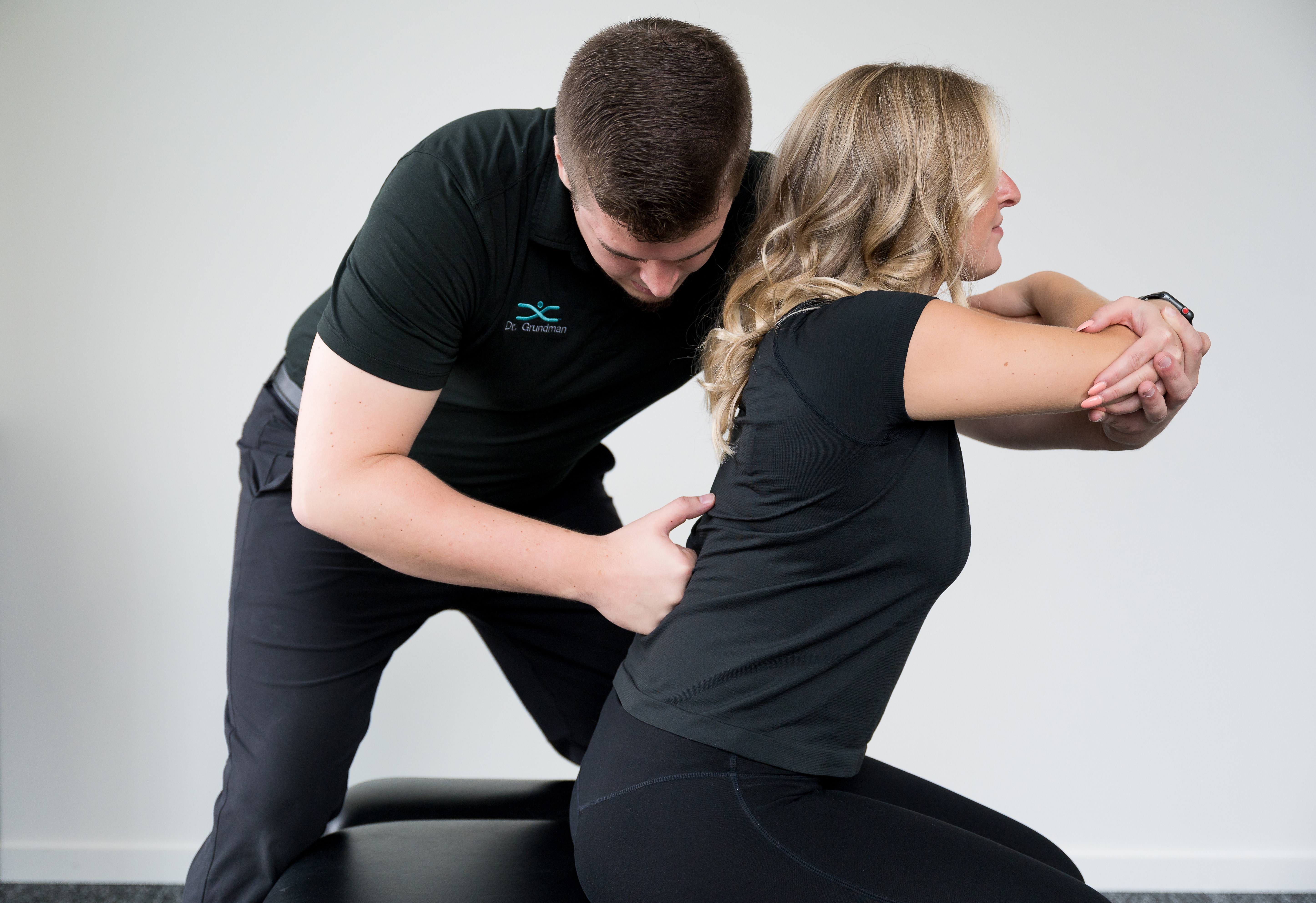
Chiropractic adjustments are used to restore proper joint motion, particularly in the spine. For golfers, this can improve thoracic mobility, reduce joint restrictions, enhance nervous system function, and support better overall movement patterns. When the joints are moving well, the rest of the body can function more efficiently.
Functional rehabilitation is where long-term progress is made. This approach focuses on strengthening weak or underactive muscles, improving coordination and movement patterns, reinforcing mechanics specific to the golf swing, and building resilience to prevent future injury. Rather than relying on isolated exercises, functional rehab emphasizes movements that directly translate to performance on the course.
You Don’t Have to Be Injured to Benefit
One of the biggest misconceptions I encounter is that these treatments are only necessary when you’re in pain. In reality, many of the same strategies used for rehabilitation are incredibly effective for improving performance.
Even if you are not currently injured, incorporating these approaches can help build sport-specific strength, improve mobility in key areas, enhance body awareness and control, increase swing efficiency and power, and reduce the likelihood of future injury.
Think of it as proactive care rather than reactive treatment. Maintaining muscle function through dry needling and soft tissue work, preserving joint mobility with chiropractic adjustments, and refining movement patterns through functional rehabilitation all contribute to a body that performs at a higher level.
When your body is prepared for the demands of the game, improvements in your swing often follow naturally.
Bringing It All Together
At the end of the day, golf is both a skill-based and physical sport. Your technique can only take you as far as your body allows.
If you are struggling with consistency, distance, or discomfort, it’s worth considering whether you have adequate thoracic mobility, effective core engagement, and sufficient spinal stability. These foundational elements often determine how well your swing holds up under pressure.
Improving these areas doesn’t require a complete overhaul of your swing. In many cases, relatively small physical changes can lead to meaningful improvements in performance.
As a chiropractor, my goal is not just to help you get out of pain, but to help you move better, perform better, and stay on the course longer. When your body functions the way it is designed to, the game becomes more enjoyable and sustainable.
Final Thoughts
A powerful and consistent golf swing is built on more than practice alone; it requires physical
preparation. By prioritizing spinal stability, core engagement, and thoracic rotation, you create a
foundation that supports both performance and longevity.
Whether you are currently dealing with an injury or simply looking to elevate your game, integrating treatments like dry needling, soft tissue work, chiropractic adjustments, and functional rehabilitation can make a significant difference.
Golf may appear effortless when performed at a high level, but that ease is the result of a body that moves efficiently, supported by strength, mobility, and control. When you invest in that foundation, the results tend to show up not just in your swing but in your overall experience on the course.
Written by Dr. Chloe Goodwin, D.C.