
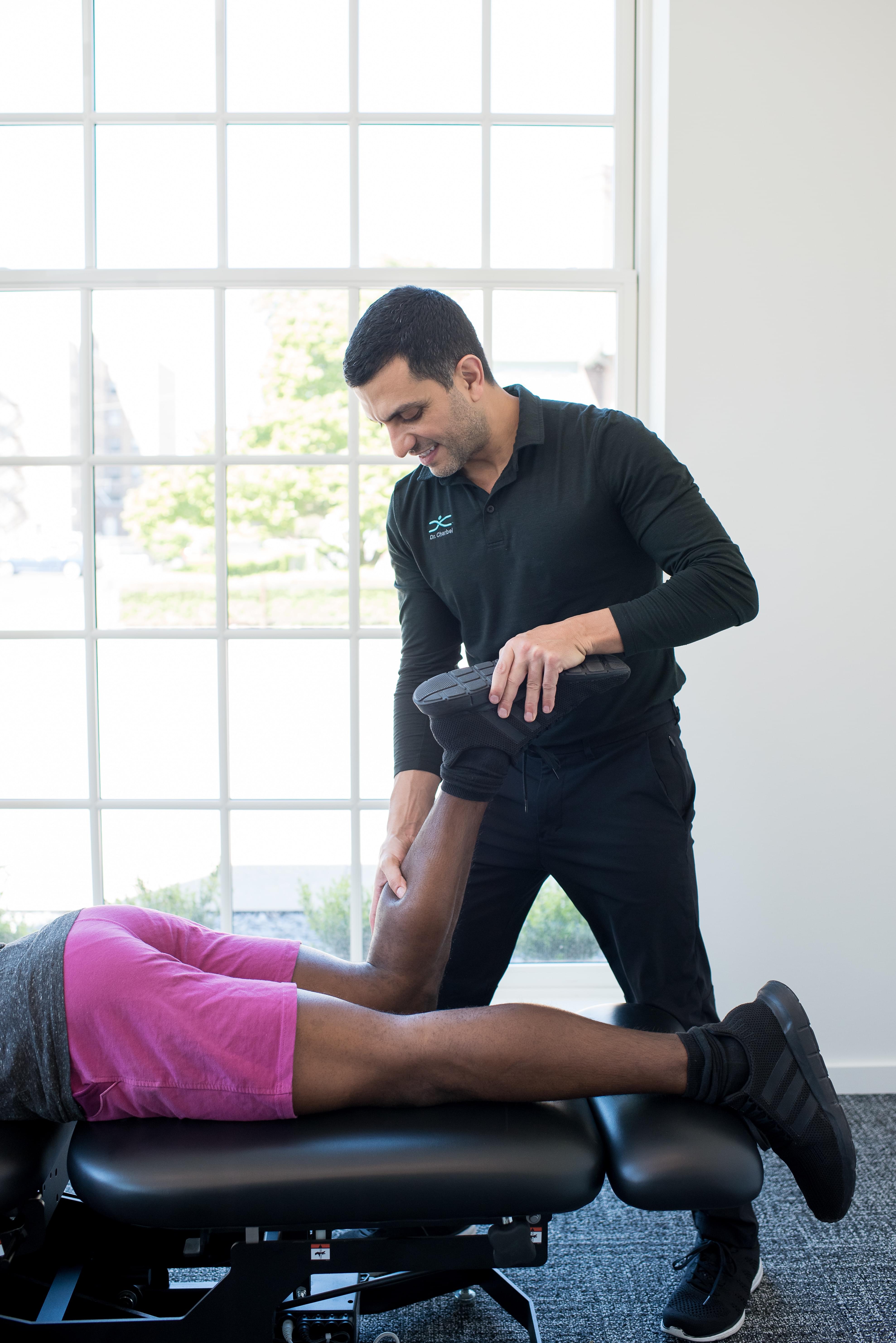
In November—December, January, February—going around, everything seems to feel like it slows down. I kind of feel like you want to go into seclusion and not go out. Not going out is also further helped by the cold. No one wants to be in the cold. Cold means ice, and ice means solid—in some cases, like solid water.
And sometimes your body may feel like it is partially “popsicle-ized” all the winter months long. You go exercise outside, and when you do, it feels like your joints are more creaky and everything’s more stiff. Waking up in the morning, or having to stay outside to get the mail from the warm home, everything seems so cold and you have to warm back up again. Things just feel more stiff. You feel like you’re constantly having to try to keep things warm so you can keep moving.
This can become really irritating, and it can really start to decrease your winter-time way of life. Not being able to move as well, or not wanting to move as well, means you can’t engage in as many activities. And those activities normally bring a healthy dose of stimulation to the brain, which means if they decrease, that can mean a decrease in serotonin, which can mean a decrease in satisfaction… and even a decrease in how you hold yourself.
So I need a good method, or a way, or an at-home thing to do to offset some of the stiffness. That would be a great idea, especially for the winter months.
If you’ve searched online for ways to deal with increased stiffness, you may have come across several different things—stretching, do this, do that, certain exercises. And one you may have come across is rolling, or foam rolling. Some people live and die by it. Some people think it’s another hoax or gimmick that doesn’t really do what it says it does. “All it does is cause me to be in pain when I do it.” “I don’t really feel good after doing it, or feel good while doing it, because it’s painful.”
Some information out there may say it has to “hurt good”—the more it hurts good, the better it’s actually doing. And some might go the opposite direction. They may say it needs to feel gentle, methodical, and medicinal.
However, if you understand what it’s doing, what it’s not doing, and how to use it correctly, it can be quite a powerful tool.
Take for example the winter months as we’ve already talked about: people don’t want to go out as much, which means in general people don’t want to move as much, which means less activity, less stretching, and so on and so forth. On top of that, the cold weather causes our tissues to have to fight harder to stay warm. And some of our tissue—being muscle tissue—the cold can cause it to be more stiff, because it is contractile tissue.
For example, if you’ve ever been cold or put under cold conditions, tissue doesn’t stretch as well and is more likely to “break” (or at least feel like it). In a sense, with long amounts of lack of motion plus colder temperatures, those muscles may feel less and less contractile and more tight—just on that idea alone. This doesn’t necessarily mean they are injured.
Especially the muscles that deal with posture. Posture muscles, by nature, usually aren’t contracting and relaxing over a wide range anyway. They’re usually doing a slow, controlled contraction to maintain posture. When you add stiffness from the cold and then add not as much motion, they become really susceptible.
Another factor is that now that they are more susceptible from these conditions, oftentimes we have to move more hesitantly in snow and ice when walking. That requires fine-motor precision in these tissues, and they may not be ready for that work, or may not do it very well, because they’re already partially handicapped from the cold and lack of function.
Home rolling or soft tissue massage is a great way that can directly target the stiffness in the muscle tissue itself. But it helps to understand exactly what’s happening as you do it, so you can apply it effectively.
One of the myths about foam rolling out there is that it literally breaks up the knots in your muscle tissue. I guess if you do it hard enough you can break up tissue, but at that point you may be causing more damage than good. It’s more in the sense that it helps regulate the nervous system’s reaction and response of the tissue through stimulation of rolling over it.
I like to think of it as there are several different types of receptors in tissues—and if we’re talking about muscle tissue, one of them is the pressure receptor. Let’s consider these pressure receptors like little monsters sleeping in thousands and thousands of beds across the muscle tissue. When you poke part of the muscle tissue, some of the monsters wake up and let you know they’re awake. You stop pushing on them, they go back to sleep, and therefore you don’t feel the pressure anymore.
But you press on more, more of those little monsters wake up, and you feel more. If you keep pushing harder, eventually you’ll start to wake up the adult monsters. The first monsters are like little kids, and the adult monsters are the ones that actually tell the brain there is pain—and if there is any more pressure, there’s going to be trouble, as in more pain and potentially injury. That can lead to triggering other different types of “monsters,” like chemical stimulation.
So when first starting to roll, it doesn’t take a lot of pressure to wake a lot of the monsters. But over time, you keep applying a certain degree of that pressure, and those monsters will eventually get used to it and start to ignore it because they’re used to it. So then it takes more pressure to stimulate them again, and it cascades up to where the adults get stimulated. And to that point, you’re feeling pain.
So in a sense, by slowly increasing stimulus over time, you can build an “immunity” or tolerance to it—where the tissue can withstand more wear and tear before it signals problems or pain. And in itself, it can take more wear and tear before it signals problems or pain.
So if your brain is not processing pain, or the nervous system isn’t communicating pain or symptoms as strongly, that tissue is not protected by the brain as much—so it’s left to more freely increase motion and mobility. But when the brain detects increased pressure to the point of damage because the adult receptors that signal pain are being fired, the brain will send back a protective mechanism, making it stiff and hypertonic. That further decreases mobility and function, which further leads to a potentially more sedentary life—which increases the chance of irritated tissue when trying to move more when you have to, thus creating a vicious cycle.
Also, when these pressure sensors are being stimulated, that sends a lot more sensation to the brainstem, where it has to—or is forced to—let more of that signal through to the brain, which is a much more pleasant sensation (or produces a much more pleasant sensation) when those signals are deciphered in the brain. So much so that some of the adult sensors that are sending a signal that is deciphered as pain in the brain can’t get through as well, or as much. So you feel less pain as you do it over time, or while actually doing it, or shortly after doing the rolling session.
It’s the same way that when you get a nice massage, all that stimulation creates harder and harder opportunities for the adult pressure sensors that can produce pain in the brain—or just pain in general—to get through. Which is why people say it feels better.
People are correct in the sense that when foam rolling, it kind of does need to hurt a little bit so that your body can develop a tolerance to that hurt. And over time, as you consistently do it, the tissue becomes more durable and less sensitive to change and tissue-type stress, which means you can actually produce more motion because less movement is being blocked because of that sensitivity.
Some people have experienced a literal ability to get deeper in a squat than they never have before. Or after doing a rolling session before working out, they feel less pain when lunging that they normally feel in their knee or in their back. That’s because the sensitivity level has been briefly altered in that one rolling session alone. So when you do more work beforehand, once you actually do the work, you’re less likely to complain or react.
Some people have said, “Which is better—foam rolling or stretching?” Well, the follow-up question should be: what is your goal? Is your goal to improve flexibility, decrease injury, or improve pain and function? They’re both great, but they do have differences in what they more strongly affect compared to the other.
Stretching is more powerful at improving local range of motion and flexibility. It improves the body’s ability to move that joint through a longer range of motion, which can be helpful in many types of sporting events and improves the ability to take a muscle to a full range of motion.
However, it has been shown to have not as great a correlation with decreasing injury and helping with restricted muscles neurologically.
What happens when we stretch a muscle is that we’re taking fibers from a shortened position to a lengthened position—as far as they go. Usually the range of motion will stop when the joint itself can’t go any further because of ligaments and the bony structures. Sometimes it doesn’t go that far because there literally is tension in the muscle.
But if you think about it, when you stretch a muscle, the parts that are already stretchy are going to stretch first and furthest before the parts that are actually more stiff—and contributing more to the stiffness issue—or the prone-to-injury area, which tends to change last. Some studies have shown that you have to hold a stretch well into the minutes before the tight areas that are structurally and physically tighter—or constricted neurologically, or constricted due to neurological inhibition—begin to release.
It’s kind of like the brain is like, “Okay, the person is still holding me in this stretch. If I’m going to maintain this any longer, I’m going to have to create more slack in the line.” Therefore the muscle that it’s still holding tight starts to accommodate that stretch before you actually start to injure yourself or injure the joint.
So the best answer is a combination of the two: rolling and stretching. I advise prioritizing rolling over stretching though. With rolling, you can stimulate the tighter areas directly, while with stretching, you may not be getting the right areas at the right time.
Also, what you can do with rolling is incorporate stretch by doing pin-and-stretch techniques. You take the muscle into a shortened position (or a contracted position), press in on those tight areas so that you pin that area—or basically change the origin or insertion of that muscle at that area—and then when you go to lengthen the muscle, it will stretch more intensely under the pinned/pressed part. Or the area between the pin and the press part will have a more focused stretch through the motion than the whole length of the muscle. Thus, by utilizing this technique, you can have more control on what part of the muscle is actually stretched.
So when I’m talking about what areas are good to roll, and in conjunction with the winter months, I would focus on the areas that are getting the least amount of movement or are holding the most tension. For the winter months, that’s obviously going to be: you’re not getting up and moving around as much, so those legs are going to need some extra attention.
I advise rolling out—with the option of stretching—twice a day: the calf muscles, the quad muscles, the hamstrings, and the glute muscles. If you’re new to foam rolling, I would start off by rolling one muscle for 10 seconds, especially if it is tender, and then move on to the next muscle for 10 seconds. It is advised to do both sides of the body, even if there’s only one side that is causing symptoms or more prone to tightness or stiffness.
Then slowly over time, you work up to 30 seconds to a minute for each muscle group, one to two times a day. The best times to do the rolling are before you have to put the body part through stress—so prior to going out and working out—and then at the end of working out are great times to roll.
If you’re not really doing a lot of exercising during the winter months, then rolling the tissue out when it’s a little bit more warm might be a little more enjoyable. So toward the end of the day, getting the foam roller out and spending that couple of minutes rolling both sides.
If you’re having active symptoms in an area of the body and you’re able to narrow down the muscle group that’s being worked, you should roll—or start to roll—the area as prescribed above for 5 to 7 days. You should start to see a general decrease in overall symptoms in that area within the first five to seven days of rolling, if you’re actually decreasing the neurological constriction of that tissue that’s causing irritation to build.
If you are not seeing results, you may not be pushing in enough for the tissue to adapt, or not doing it long enough. Or there is a subconscious built-in compensatory movement pattern that is resetting the neurological tension in the tissue because of compensation, and that needs to be corrected in order to decrease neurological tension and tone in the muscle and maintain it.
On the flip side, if you start to foam roll and you start to see an increase in pain in the area in the first couple of days (three to four days), then you need to cut back the amount of time or pressure you’re putting on the tissues. If you still do that and you’re still seeing an increase in pain, then you’ll stop rolling altogether.
This can mean there could be an advanced case of neurological stiffness—what we call trigger points—in the area that need a more gentle targeted approach to release before they can then be rolled out. Certain techniques, such as dry needling, and certain neurological activation/relaxation specialized exercises can be used to help bring the overall excitability and reactivity of the muscle tissue back down to a level where you can start to foam roll it.
hose places that provide these are usually specialized in working with neuro-musculoskeletal conditions. We here at Integrated Health Solutions provide an integrated approach where we identify the tissues that are causing the symptoms and any compensatory movement patterns that are contributing to it. Then through targeted tissue treatment via dry needling and myofascial release—along with joint resetting and alignment, and rehabilitation functional dynamic functional exercises to help correct imbalances—we can target all those areas without having to do a major amount of foam rolling (or if you’re not able to roll).
Also, if you are hesitant or don’t know how or what areas to foam roll and need extra help, you can come and pay us a visit and we can help get you started either way.
So if you find yourself this winter stuck, stiff, and not able to get up and move like you want to, please jump online, go to www.ihsindy.com, and schedule your appointment with one of our doctors today and get your winter life function back.
Content Provided by Dr. Andrew Sanders