Springtime is finally here, meaning that many people are eager to become more active and spend time outdoors. Whether you’re walking, running, hiking, or biking, foot health plays a critical role in your overall movement and comfort.
Ensuring that your feet are properly supported can make a significant difference – not just locally, but throughout your entire body.
The Foot-Spine Connection
If you’ve ever been in a chiropractic office, you probably hear this statement: “everything is connected.” This is especially true when it comes to the relationship between the feet and the spine. Pain in the base of support (your feet) can lead to compensatory changes up the entire kinetic chain – including the knees, hips, and spine. Even subtle alterations in gait or biomechanics can place abnormal stress on the lumbosacral spinal region.
One common complaint that goes along with pain in the feet is pain in the lower back. Foot pain alters the amount of load placed through the painful foot, which is subsequently transferred up into the knee, hip, and lumbosacral spine. Most people, when in pain, tend to shift their weight to the non-painful side.
The patient’s “good side” is forced to bear more load due to the painful side not being able to do so. This compensatory movement strategy affects the patient’s pain and quite often leads to issues up into the lower back. Although someone may present with a back issue, in this particular example, the foot is the likely causative factor of the lower back pain.
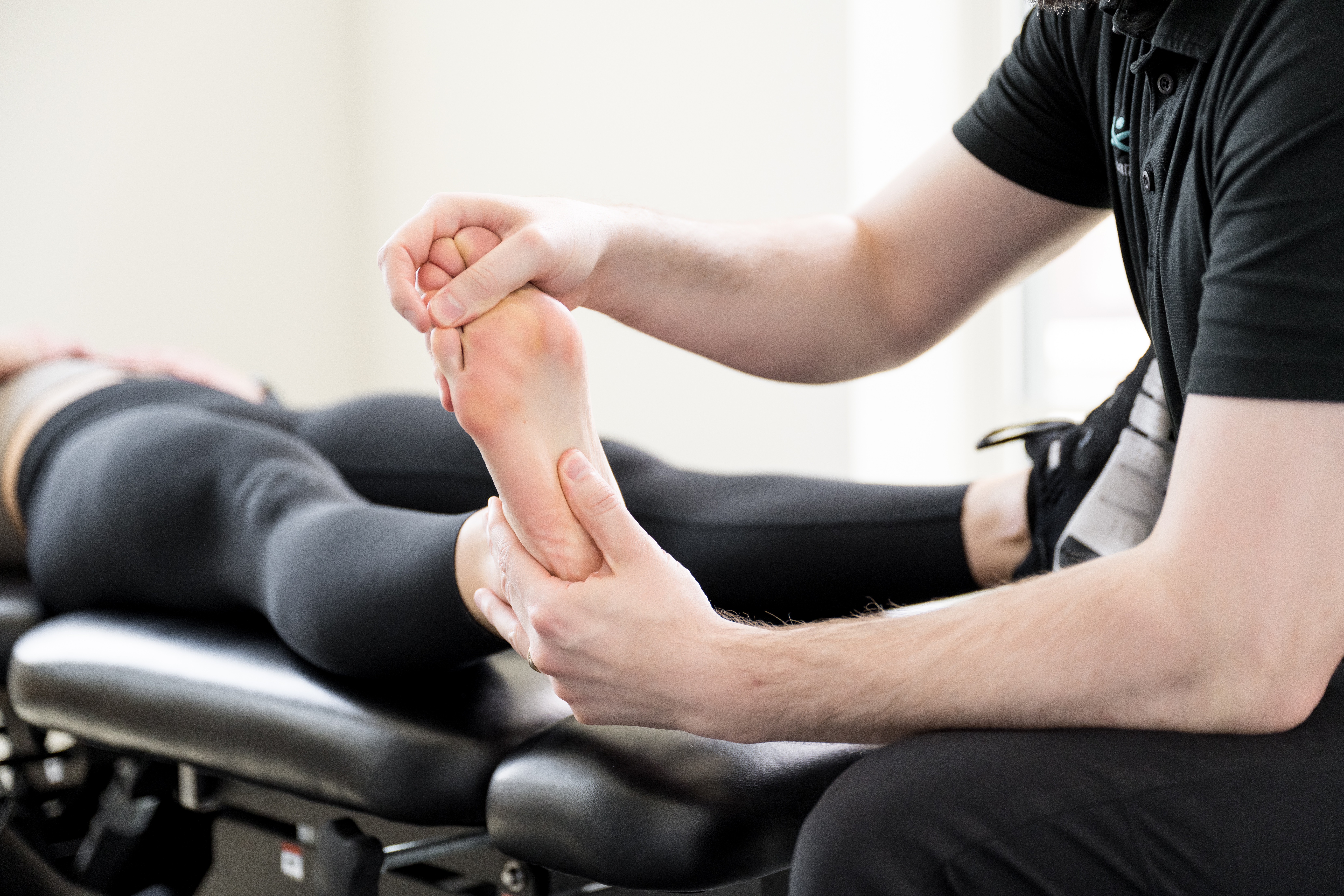
With a foot examination (whether this is done via scanner, or by a trained professional), issues with the feet can often be connected with other aches and pains up into the spine. The body is excellent at compensating for pain; even if pain is located in the feet, there is a good chance that the knees, hips, and spine are all suffering from the issues with the feet.
This begs the question; why are orthotics so highly sought after, and how can they help with pain?
Orthotics: Do They Help or Hurt?
The history of orthotics dates back a couple thousand years. Of course, the technology of foot orthotics has drastically improved over the years. In the late 1950s, Dr. Merton Root created the first functional orthoses for the feet, designed to treat excessive pronation in his patients.
Fast forward roughly 70 years, and orthotics have been re-made and refined countless times to assist in the treatment of a multitude of foot-related concerns; these range from excessive pronation, plantar fasciitis, pes planus (flat feet), and achilles tendinopathy, to name a few. In some cases, orthotics may also help provide relief to those dealing with knee, hip, and/or lower back pain – particularly when these
stem from foot dysfunction.
The big question is, do orthotics provide relief for the people who choose to use them?
The efficacy of orthotics has been debated for some time. Nothing is ever one-size-fits-all, after all. Of course, it is case-dependent for each person whether or not they will obtain relief, or a full-on resolution of their pain. They are not a universal solution for pain. Here are some pros and cons for the utilization of orthotics:
Pros:
By providing additional structural support, orthotics are able to assist in providing relief for a variety of foot-related pains and conditions. As previously stated, orthotics come in many different shapes and sizes to befit patients of many kinds. Since they are so prevalent in today’s world, they can befit different body types, different demands placed on the feet, activity levels, etc. They can also be customized for the wearer, depending on their individual foot structure (more on that later).
Cons:
While orthotics are a versatile tool to assist in treatment of pain and foot conditions, orthotics can cost quite a bit of money. While store-bought orthotics are more cost-efficient, the need for constant replacement is elevated. The quality of the orthotic isn’t as high as a custom one, leading to faster wear-and-tear.
On the flip-side, custom orthotics last longer, but are much more costly; they still need to be replaced depending on the person wearing them. They can be a significant investment up-front.
Another potential issue with orthotics is that they can lead to weakness of the intrinsic foot, and the surrounding musculature. Too great of an emphasis on orthotic support does not allow a person to use the muscles of the feet in a proper manner, often leading to weakness. This also builds a reliance on the use of orthotics for certain activities.
Orthotics should be viewed as a tool – often most effective when combined with a comprehensive treatment plan.
Custom vs. Store-Bought
Patients often ask whether custom orthotics are worth the investment compared to typical store bought options.
Brands ranging from Dr. Scholl’s, Superfeet, and Cadence rule the store-bought realm, while custom tailored brands such as Foot Levelers and SOLO Labs are also reputable in the industry. You may be asking, what are the key differences in a store-bought brand vs. a custom orthotic? Which one should I be seeking, if I need them?
Store-bought brands can be found in most stores nationwide, at an affordable rate. They are carried anywhere from CVS, Walgreens, and Walmart. Though they may not have as much durability, their affordability and availability are among their greatest strengths. Plus, for some, they may provide great relief of foot pain and other symptoms. They typically fall in the realm of “one size fits most”, and are not custom made based on a person’s foot shape. This leads to the previously noted lack of durability and precision for the wearer.
Custom-made brands are a bit more difficult to find. They can be found in Good Feet stores, running/ shoe stores, and some health clinics (typically podiatry clinics). They are much more durable, and are custom-designed to fit the person based on their foot/arch shape, as well as the overall day-to-day demand placed on the person’s feet. They are a much more significant investment, but last longer, and can provide greater relief of pain than store-bought orthotics.
Foot Evaluations in Our Clinic
At IHS, foot pain is one of the many concerns that patients walk through our doors with (no pun intended). We take a comprehensive approach to evaluation and treatment.
A thorough history would be taken prior to any examination of the foot region. We would determine how long the pain has been present, how the pain began, and what gives it relief/causes pain, to name
a few things.
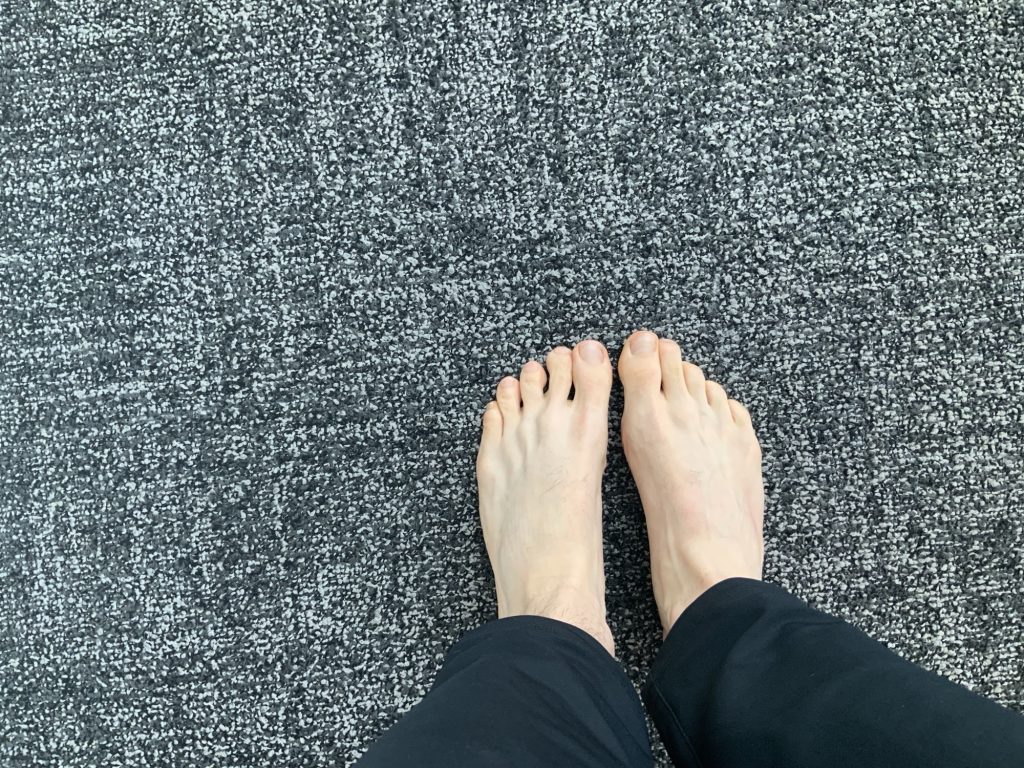
With the exam portion, we would first visually assess the feet; we would look for any signs of swelling, discoloration, dilation of vessels, nail health, and any asymmetry of the feet. We would also assess the arches of the feet.
We would then assess toe splay ability, and gait pattern; we would assess how the foot strikes the ground, if any discrepancy is present, and if pain is altering the normal walking pattern in any way.
After this, palpation is needed to assess areas of tightness, tension, and pain in the foot/ankle region.
We would then work our way up; assessing and palpating the lower leg, knees, quads, hamstrings, glutes, hip flexors, as well as the lower back. Remember, the entire kinetic chain can be impacted by foot pain!
Lastly, we would assess strength of the toes and feet; utilizing individual contractions of the muscle, we can assess just how well the foot/toe musculature is firing to see if any weakness or discrepancy is present.
This thorough approach allows us to identify both local and contributing factors, ensuring a targeted and effective treatment plan is carried out.
Exercises to Strengthen the Arches
While orthotics are excellent for some of our patients, and can provide assistance as an adjunctive treatment to those with foot pain, it is crucial that we strengthen the intrinsic foot and surrounding musculature (ex: tibialis & peroneals) for the best results.
This is to ensure that not only are we focusing on pain relief, but addressing a potential underlying cause of a patient’s foot pain. Our goal at IHS is to educate and empower our patients so they have what they need to eventually become independent from care.
Here are a few of the more common exercises that we perform in the clinic to address foot pain, and strengthen the arches of the feet:
Toe Isometrics:
A great foundational foot exercise, this gives the doctor an idea of the patient’s capacity for toe muscle function. Great toe flexion and extension are tested separately from the remaining toes, due to different muscles being tested. The doctor applies resistance to the toe being tested in either flexion or extension, and has the patient apply an equal and opposite resistance for between 3-5 seconds.
Toe Splay:
This exercise is excellent for abduction of the interosseous muscles of the feet. The ability to splay one’s toes is vital for a strong base of support with movement. The opposite movement (adduction) can also be done by having the patient force the toes together, with or without doctor-applied resistance.
Towel Scrunches:
An exercise that strengthens foot & toe flexion. The patient should perform this exercise while barefoot; using a towel, the patient will flex/curl their toes towards the ground in-order to grab or ‘scrunch’ the towel. The patient should feel a contraction with each rep in the mid-foot region.
ToePro Exercises:
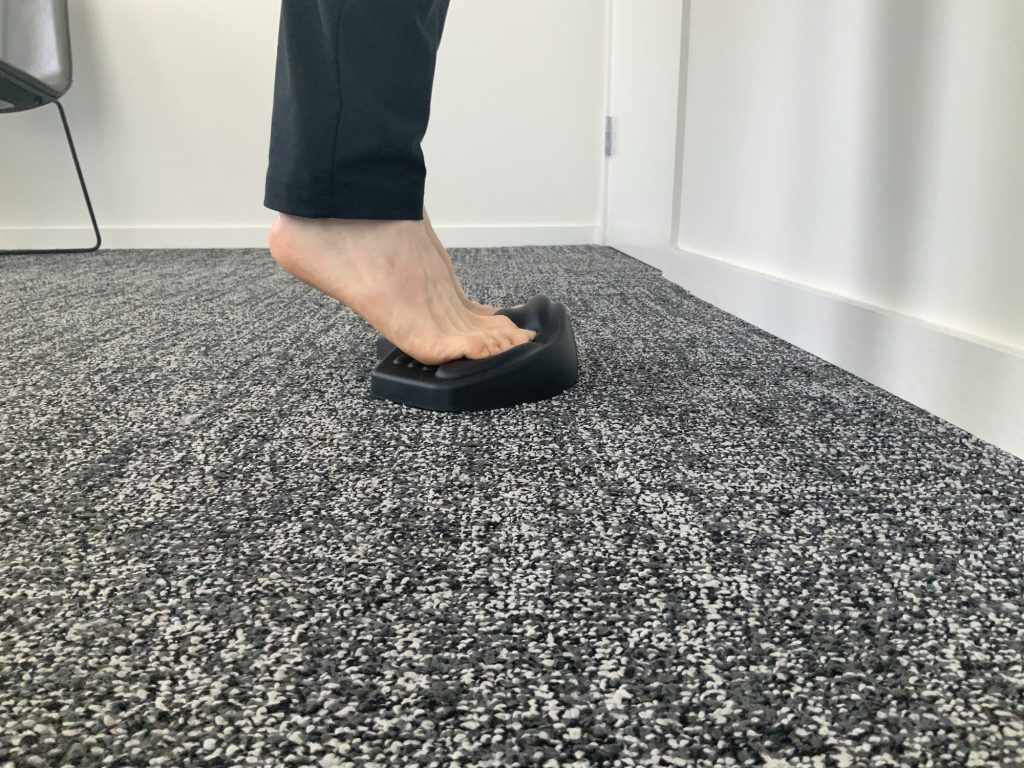
The ToePro is a device that can best be described as a foam pad that allows for specific training of the foot and ankle musculature. There are a large variety of exercises that can be utilized on the device, targeting the intrinsic foot muscles, as well as muscles in the lower leg (peroneals, gastroc, soleus, and tibialis muscles). For addressing arch strengthening, toe flexion paired with plantarflexion on the ToePro is a good option.
As a general rule, any strength training recommended at IHS should be done at home as well as in office. Patients should look to complete 3 sets of 10 reps, around 2-3x per week.
To tie things up, the feet will absolutely have an impact on spinal health. The body is a master compensator, and if issues persist in the feet, there is a good chance that the spine will feel the effects of that down the road. If you’re looking to get back on your feet to enjoy the spring season, don’t let foot pain take you down.
Content Provided By Dr. Josh Monzel