

We’re getting into a very interesting time of the year, particularly for patients who come into my office. Every year around this time, something predictable starts to happen.
People who made it through the winter just fine suddenly begin developing aches and pains. And it almost seems as if spring itself triggered the symptoms.
Many of them describe the same pattern.
Areas that were previously doing fine begin to feel a little different. The low back may feel achy or stiff. Some people notice a sense of tightness between the shoulder blades. The neck may feel tense. Knees that were quiet all winter suddenly start acting up again.
What’s interesting is that during the winter months, these aches and pains often felt almost dormant.
And the natural question people ask is simple: Why are they suddenly back?
In many cases, nothing dramatic actually happened. There wasn’t a fall. There wasn’t a sudden injury. Most people can’t point to a single moment when something went wrong.
Instead, the symptoms tend to show up gradually.
Often it begins after a weekend where activity increases just a little. Someone gets the lawn mower out for the first time. Someone spends a few hours cleaning up the yard. Others start digging in the garden, planting flowers, or hauling branches and yard debris.
None of these activities are unusual.
In fact, they are normal, healthy activities.
But they represent a change in how the body is being used.
And that change is usually what drives the symptoms.
Why Spring Activity Often Triggers Pain After a Sedentary Winter
The main reason we see this pattern has to do with how activity levels change between winter and spring.
During the winter months, people naturally become less active outdoors. Even in places where snow shoveling happens occasionally, most of the day-to-day routine tends to involve less physical movement.
People spend more time inside.
Workdays often involve sitting at a desk for extended periods. The body settles into a pattern that includes long hours of sitting, limited walking, and fewer tasks that involve bending, lifting, or carrying.
Over time, the body adapts to that pattern.
This is one of the remarkable things about the human body.
The muscular system, joints, tendons, and connective tissues are constantly adjusting to the demands we place on them. If we sit for long periods every day, the body becomes very efficient at that pattern.
Hips remain bent.
The spine tends to lean forward.
Shoulders round slightly toward the computer screen.
The muscles that support posture begin working in a very specific way that fits that routine.
And during winter, this pattern repeats day after day.
At first, it usually doesn’t cause much trouble. The body slowly adapts throughout the season.
But when spring arrives, something changes.
Warmer temperatures, longer daylight hours, and the simple excitement of better weather encourage people to become more active again.
Suddenly people want to get outside.
They want to work in the yard, go for walks, start running again, ride their bikes, clean up the property, or begin gardening projects.
All of those activities are good for the body.
In fact, regular movement is one of the most important things someone can do for long-term health.
I once had a professor who used to say something that stuck with me:
“The day you stop moving is the day you start dying.”
Movement matters.
But the challenge is rarely the activity itself.
The challenge is the speed of the transition.
When the body moves quickly from months of lower activity into several hours of yard work or physical tasks, the muscles and joints are suddenly asked to do much more than they have been doing recently.
And that sudden change can create irritation.
How Sitting Changes the Body Over Time
Posture plays a big role in this process.
Many desk jobs naturally encourage a seated posture where the head moves forward toward a computer screen. The arms stay in front of the body while typing or using a mouse.
Over time, this posture can lead to rounded shoulders and a forward-leaning neck position.
When this pattern repeats day after day, the muscles responsible for stabilizing the spine can become less active or less responsive simply because they are not being challenged through a full range of movement.
Again, this doesn’t necessarily cause immediate pain.
But it does mean that certain muscles are doing less work than they normally would during a more active lifestyle.
When spring activities begin again—lifting, pulling, digging, carrying—those same muscles are suddenly asked to do much more.
If they are not prepared for that workload, irritation and strain can develop.
This is one of the most common patterns seen in clinics that treat musculoskeletal pain during the early spring months.
Common Pain Areas During the Seasonal Transition
Several areas of the body tend to become symptomatic during this transition.
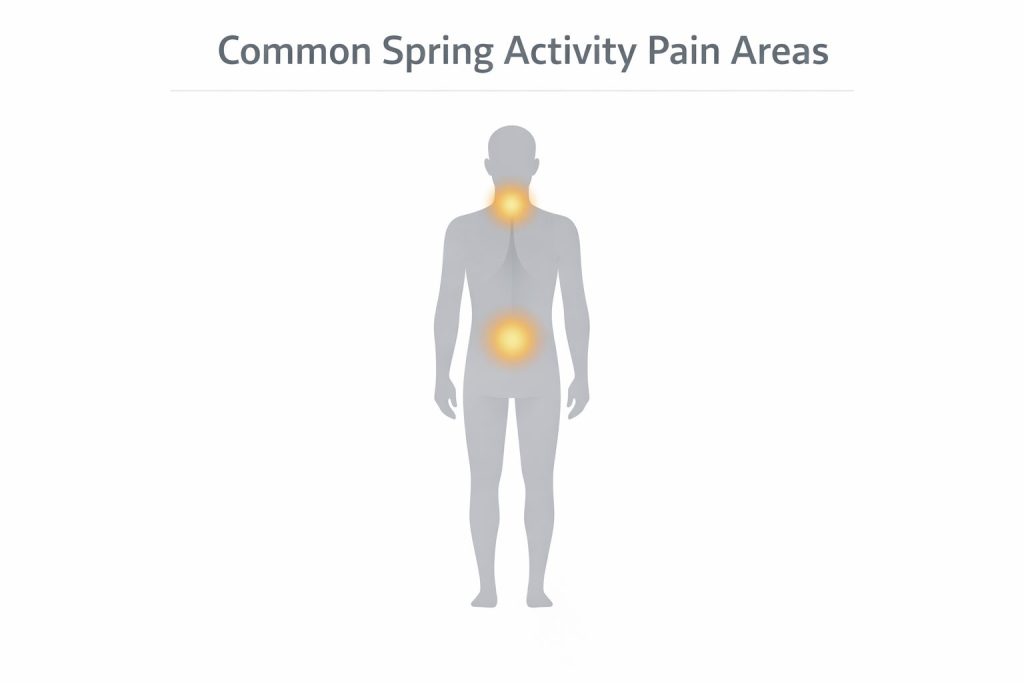
Low Back
One of the most common areas affected is the lower back.
Activities such as raking leaves, digging holes, pushing a lawn mower, or lifting yard debris all place load on the posture system of the body.
The muscles of the lower back help stabilize the spine while bending and lifting.
If those muscles fatigue quickly because they have not been used in that way for several months, other structures in the lower back may begin to experience more strain.
This is one of the reasons many people look for help from a chiropractor for lower back pain after a weekend of yard work.
Between the Shoulder Blades
Another common complaint involves discomfort between the shoulder blades.
This area of the upper back plays an important role in stabilizing the shoulders and maintaining posture.
When people sit for long hours at a desk, the shoulders often drift forward slightly. This creates tension across the muscles in the middle of the back.
When spring activities begin—reaching, pulling, lifting, carrying—those muscles are suddenly asked to do much more work.
If they are already fatigued from months of posture strain, symptoms can develop.
People often describe this sensation as a burning tightness or an aching discomfort between the shoulder blades.
Neck Stiffness
Neck stiffness is another issue that frequently appears during the seasonal transition.
When the head stays positioned forward during desk work, the muscles of the neck and upper back must work harder to support its weight.
The human head is actually fairly heavy—often estimated between 10 and 12 pounds.
When the muscles supporting it remain in a forward-leaning position for long periods, they can become fatigued.
Later, when physical activity increases, those muscles may already be working near their limit.
The result is that people may experience stiffness, headaches, or neck tension once outdoor activities increase.
Preparing the Body for Spring Activity
The good news is that most of these seasonal aches and pains are preventable.
One of the simplest ways to reduce the risk of injury is to allow the body time to adapt gradually to increased activity.
Instead of jumping directly into several hours of yard work, it often helps to build activity slowly.
Shorter activity sessions spread across several days can give muscles and joints time to adjust.
For example, someone planning a full day of gardening might begin the first week of spring with smaller tasks.
A short walk.
Light yard cleanup.
Simple stretching.
These activities begin reintroducing movement patterns that may have been dormant during the winter months.
Mobility Matters
Mobility is another important factor.
During long periods of sitting, certain joints—especially the hips and middle spine—may move less frequently through their full range of motion.
When activity suddenly increases, these joints may feel stiff.
Gentle mobility exercises for the hips, shoulders, and thoracic spine can help restore movement before heavier tasks begin.
Even small improvements in mobility can make lifting, bending, and reaching feel easier.
Strength and Stability
Strength also plays a role in preparing the body for increased activity.
The muscles that support posture and stabilize the spine function best when they are used regularly.
Gradually strengthening the core, hips, and upper back can improve the body’s ability to handle physical demands.
Exercises that coordinate breathing with pelvic and spinal position can be particularly helpful for improving endurance in spinal stabilizing muscles.
Many individuals who visit a chiropractic rehabilitation center during the spring months are not dealing with severe injuries.
Instead, they are experiencing the natural effects of deconditioning combined with sudden increases in activity.
When movement improves and strength gradually returns, symptoms often improve significantly.
Warm-Up Before Outdoor Work
Warm-ups are commonly associated with sports, but they can be just as useful for everyday physical activities.
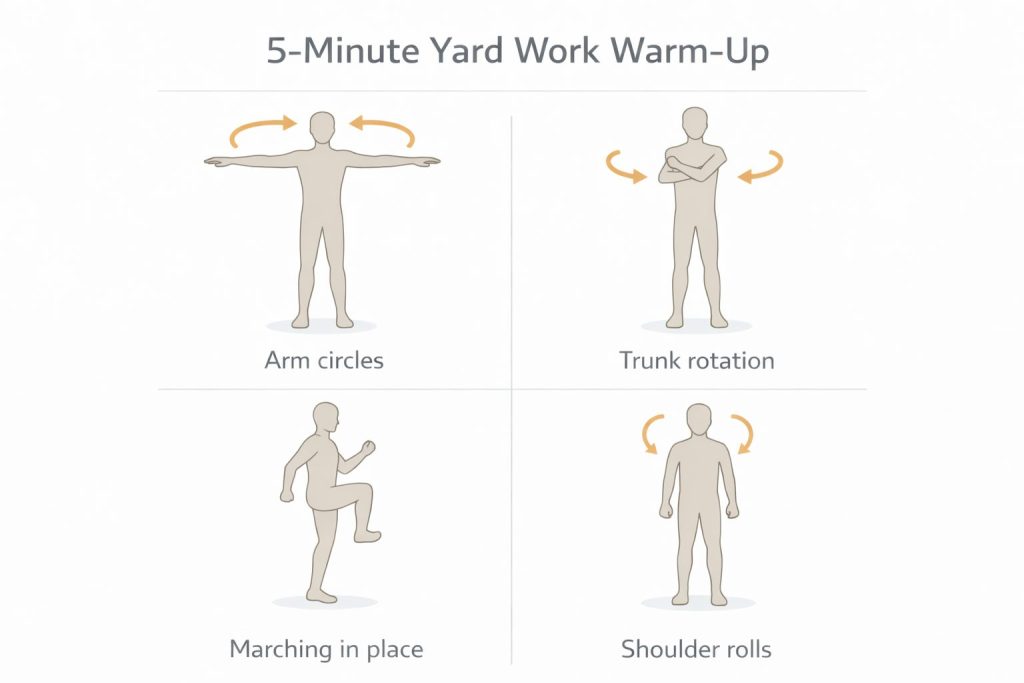
A short warm-up prepares the body for movement by increasing blood flow and activating muscles.
Even five minutes can make a difference.
Simple movements such as trunk rotations, gentle twisting, leaning side to side, shoulder shrugs, and arm circles can help loosen the upper back.
Light hip mobility exercises can prepare the body for bending and squatting.
Marching in place for a minute or two can help wake up the hips and pelvis.
The goal is not to perform a full workout.
The goal is simply to prepare the body for movement.
Another helpful strategy is walking for a few minutes before beginning yard work. This allows the body to transition gradually into activity.
Gentle stretches for the arms and shoulders can also prepare the body for lifting or digging.
These small habits can significantly reduce the sudden strain that occurs when someone moves directly from sitting to heavy physical work.
Knowing When to Seek Help
Some soreness is normal when activity levels increase.
Mild stiffness or muscle fatigue after activity is often part of the body adapting to new demands.
These sensations usually improve with movement, stretching, or rest.
However, certain symptoms may indicate the need for evaluation.
Pain that continues to worsen, interferes with daily activities, or spreads into the arms or legs should be taken seriously.
Persistent lower back pain, ongoing discomfort between the shoulder blades, or symptoms involving numbness or tingling should not be ignored.
Healthcare providers—including chiropractors and other musculoskeletal specialists—often evaluate these symptoms to determine whether movement patterns, joint mechanics, or other factors are contributing to irritation.
In some cases, symptoms may also appear after events such as a car accident, where injuries involving the spine can develop gradually.
The key is to listen to the body.
If discomfort improves as activity increases gradually, it is often part of the normal seasonal transition.
If symptoms persist or worsen, professional guidance can help identify the underlying issue.
Bringing It All Together
Spring should feel exciting.
After months of colder weather and more sedentary routines, many people look forward to getting outside again.
And that enthusiasm is a good thing.
The key is to allow the body time to transition.
Small steps—gradually increasing activity, preparing the body with simple warm-ups, paying attention to posture, and rebuilding strength—can make outdoor activities far more comfortable.
The body is designed to move.
When we increase activity thoughtfully, muscles and joints adapt better.
With a little preparation and awareness, it is entirely possible to move from a desk-centered routine into a more active outdoor lifestyle without unnecessary strain.
And that means enjoying everything the spring season has to offer.
If you find yourself struggling with that transition, even when taking precautions, it’s okay to seek guidance.
At Integrated Health Solutions, we focus on helping patients understand their bodies and move better so they can return to the activities they enjoy.
If you need help during that transition, you’re welcome to reach out.
Call 317-449-2020 or visit www.ihsindy.org to schedule an appointment.
Our goal is simply to help you move comfortably again so you can get back to the things you’ve been looking forward to all winter.
Content Provided By: Dr. Andrew Sanders


