
Running is one of the most natural human movements. Yet modern lifestyles, hours of sitting, supportive footwear, and hard surfaces have quietly changed how our feet function. If you’re a runner, your feet are your foundation. Every stride begins and ends there. When foot stability and function are optimized, performance improves, and injuries decrease. When they’re compromised, compensation patterns ripple up through the ankles, knees, hips, and even the spine.
Let’s explore why foot stability matters so much in running, how a wide-toe-box shoe can make a major difference, why foot dexterity and strengthening are often overlooked, and how chiropractic care can play a vital role in restoring optimal mechanics.
Your Foot is the Foundation for Every Mile
The human foot is an engineering marvel. It contains 26 bones, 33 joints, and over 100 muscles, tendons, and ligaments. Together, these structures create a dynamic system that must perform two opposing functions: mobility to absorb shock and adapt to uneven surfaces, and Stability to create a rigid lever for propulsion.
During running, your foot hits the ground with forces that can reach two to three times your body weight. If your foot cannot effectively absorb, control, and transfer those forces, other structures will take on the load. A well-functioning foot maintains a stable arch without collapsing, allows the big toe to extend properly during push off, distributes pressure evenly across the forefoot, and provides proprioceptive feedback for balance and coordination.
When these functions break down, problems often follow: plantar fasciitis, Achilles tendinopathy, shin splints, knee pain, IT band irritation, hip tightness, and even low back pain.
Difference Between Stability vs. Rigidity
Stability doesn’t mean stiffness. A stable foot is not rigid all the time. It’s adaptable.
Early in the stance phase, the foot pronates slightly, which allows it to absorb shock and conform to the ground. Later in the gait cycle, it supinates and becomes more rigid to create an efficient push-off.
If the foot stays too loose, energy leaks occur, and tissues are overstressed. If it stays too rigid, shock absorption decreases, and impact forces travel upward.
Optimal running mechanics depend on this controlled transition.
Modern Footwear May be the Problem
Many modern running shoes are built with narrow toe boxes, elevated heels, and thick cushioning. While cushioning can feel comfortable, it can sometimes interfere with natural foot function. A narrow toe box compresses the toes together. Over time, this can reduce big toe mobility, decrease intrinsic foot muscle strength, alter balance and proprioception, and change how force is distributed across the forefoot.
One of the most important structures for propulsion is the first ray and the big toe. During push-off, the big toe should extend about 60 degrees. If it cannot extend properly, the foot cannot create a stable lever, and compensation occurs at the ankle or knee.
Why a Wide Toe Box Matters
Shoes from brands like Altra and Topo Athletic are known for their wider toe box designs. This design allows the toes to splay naturally.
Toe splay is not cosmetic; it’s functional. When toes can spread: the forefoot base widens, improving balance, intrinsic foot muscles activate more effectively, pressure distribution improves during stance, and the big toe can extend and stabilize push-off.
Think of your toes like the legs of a tripod. When compressed together, stability decreases. When spread, your base becomes stronger.
A wide toe box also reduces the likelihood of developing issues like bunions, neuromas, and chronic forefoot pain, conditions that can dramatically alter running mechanics.
Foot Dexterity
Many runners focus on glute strength, core stability, and mobility drills. Few think about foot dexterity.
Foot dexterity refers to the fine motor control and strength of the small intrinsic muscles within the foot. These muscles support the arch, control toe movement, assist in balance, and fine-tune force distribution.
When these muscles are weak or underused, larger muscles like the posterior tibialis, calf complex, and peroneals must compensate. Over time, overload injuries develop.
Consider this: if you placed your hand in a stiff glove all day, every day, your hand muscles would weaken. Now imagine that glove is your shoe.
How to Improve Foot Strength and Dexterity
Strengthening the foot doesn’t require fancy equipment. It requires consistency and intentional activation.
Here are foundational exercises:
- Short Foot Exercise
- Gently draw the ball of the foot toward the heel without curling the toes. This activates the intrinsic arch stabilizers.
- Toe Yoga
- Lift the big toe while keeping the others down, then reverse. This improves neural control and toe independence.
- Towel Curls (with progression)
- Scrunch a towel with your toes, but progress toward controlled, precise movements rather than aggressive gripping.
- Barefoot Balance Work
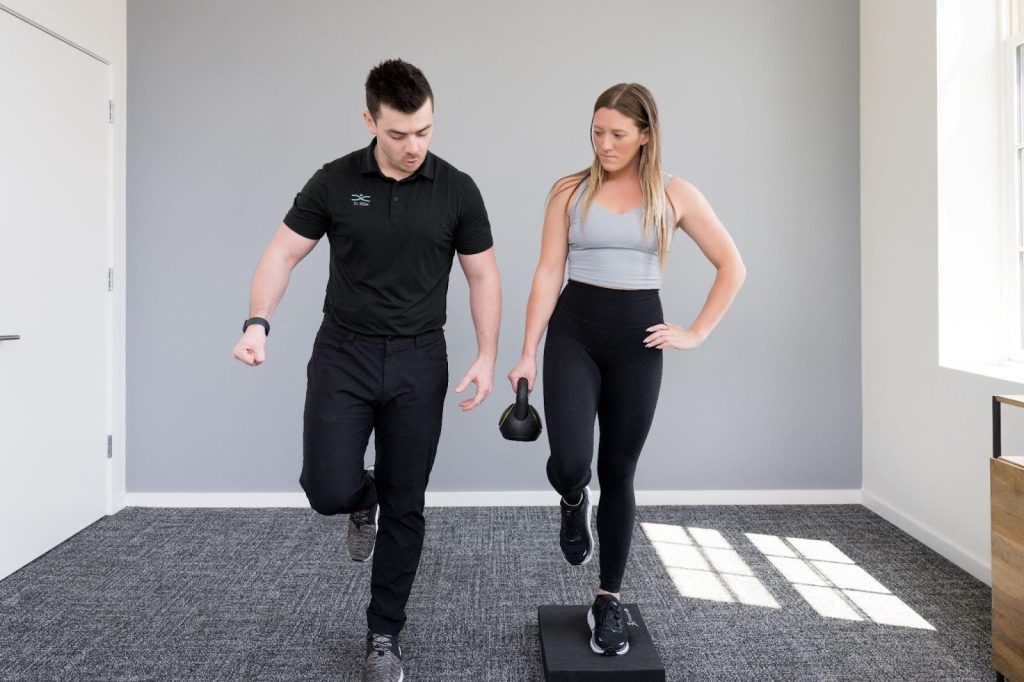
- Standing on one leg barefoot enhances proprioception and foot muscle activation.
- Controlled Calf Raises
- Perform slow calf raises, focusing on evenly distributing weight across the big toe, little toe, and heel.
Transitioning gradually to more minimalist or wide-toe box footwear can further stimulate intrinsic muscle engagement, but this should be done progressively to avoid overload
How Foot Dysfunction Affects the Whole Body
The body operates as a chain. When the foot loses stability, the ankle may excessively pronate or roll outward. The tibia rotates improperly. The knee collapses inward. The hip loses efficient extension. The pelvis may rotate asymmetrically. The lumbar spine compensates.
Seemingly unrelated injuries often trace back to foot mechanics.
For example, chronic knee pain may stem from poor arch control. Recurrent hamstring tightness may reflect limited push-off efficiency. Low back discomfort may result from asymmetrical loading patterns. Correcting foot function can reduce stress upstream.
Where Chiropractic Care Fits In
Chiropractic care is often associated with spinal adjustments, but its scope is broader, particularly for runners.
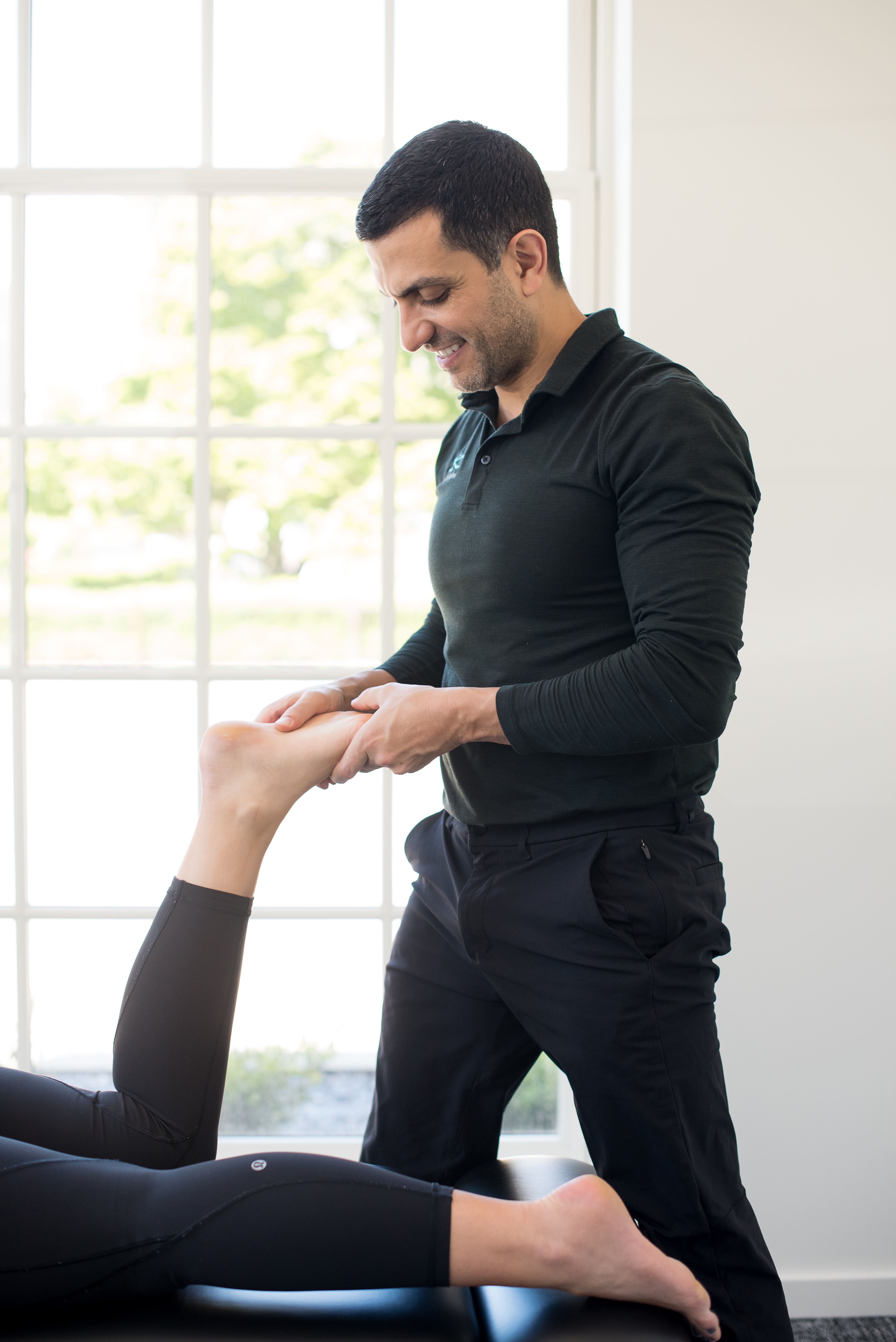
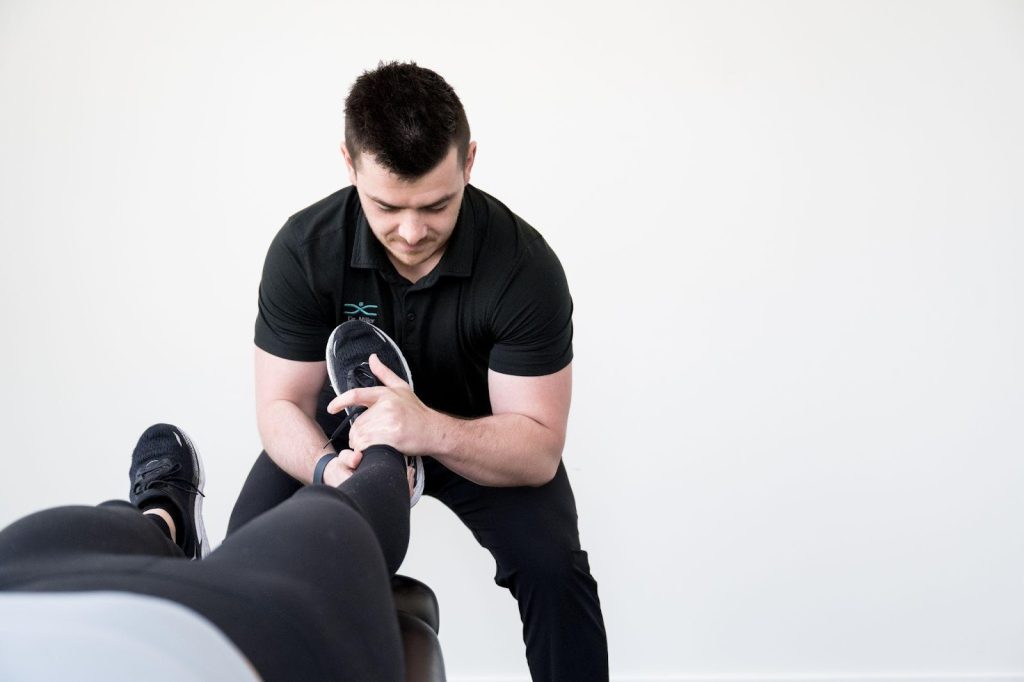
- Joint Adjustments – The foot contains numerous small joints that can become restricted, including the subtalar joint, talocrural joint, midfoot articulations, and first metatarsophalangeal joint (big toe). When these joints lose mobility, compensatory patterns develop. Specific adjustments can restore proper motion, improving shock absorption and propulsion mechanics. Restoring big toe extension alone can dramatically change running efficiency.
- Dry Needling – Dry needling targets trigger points and dysfunctional muscle tissue. In runners, common areas include the calves (gastrocnemius and soleus), posterior tibialis, peroneals, and plantar intrinsic muscles. By reducing muscle tone and improving neuromuscular activation, dry needling can help improve ankle mobility, decrease plantar fascia strain, and restore more efficient loading patterns. This is particularly helpful when chronic tightness limits natural foot motion.
- Soft Tissue Therapy – Manual therapies such as instrument-assisted soft tissue mobilization and myofascial release can break up adhesions and improve tissue glide. Chronic overuse often leads to thickened, restricted fascia in the plantar surface and calf complex. Addressing these restrictions enhances mobility, reduces compensatory tension, and improves circulation. This creates a better environment for strengthening exercises to be effective.
- Targeted Rehabilitation – Perhaps the most important piece is corrective exercise. Chiropractors trained in functional rehabilitation design specific programs that strengthen intrinsic foot muscles, improve ankle dorsiflexion, enhance hip stability, and reinforce proper gait mechanics. Rehab is not just about isolated strengthening; it integrates the entire kinetic chain. For example, strengthening the gluteus medius while improving arch control can reduce knee valgus during stance. Correcting thoracic mobility can improve arm swing and overall running efficiency.
Why Stability Improves Performance
Foot stability is not just about injury prevention; it’s about performance.
When the foot functions efficiently, energy transfer improves, ground contact time decreases, propulsion becomes more powerful, and stride symmetry increases.
A stable foot acts like a loaded spring. It absorbs force, stores elastic energy, and releases it during toe-off.
If that spring is unstable, energy leaks out.
Elite runners often demonstrate exceptional foot strength and big toe control, not because they were born with it, but because their training and mechanics preserved it.
Transitioning Safely
If you’re considering improving foot function or transitioning to a wider toe box shoe, make changes gradually. Start with short runs or walking periods. Add strengthening exercises before increasing mileage. Monitor for calf soreness; this is common early on. And consider a movement assessment with a qualified provider.
Sudden changes in footwear or loading can irritate tissues that are not conditioned for new demands.
Movement Quality Over Cushioning
Cushioning can mask dysfunction. Stability restores it.
Rather than relying solely on supportive shoes, orthotics, or motion-control designs, many runners benefit from improving the strength and adaptability of their own feet.
This doesn’t mean everyone should run barefoot. It means the foot should be capable, resilient, and strong.
Your body already has the tools, muscles, joints, and neural pathways. They simply need to be engaged and trained.
Bringing It All Together
Foot stability and function are foundational for running health and performance. A wide-toe box shoe allows natural toe splay and better force distribution. Foot dexterity and intrinsic strengthening build resilience and improve energy transfer. Chiropractic care enhances joint mobility, reduces soft tissue restriction, and provides targeted rehabilitation to reinforce lasting changes.
When you address foot mechanics intentionally, you don’t just treat symptoms; you optimize movement.
And when your foundation is strong, every mile becomes more efficient, more powerful, and more sustainable.
If you’re a runner dealing with recurring injuries or plateaued performance, start at the ground. Strengthen your feet. Let your toes move. Restore joint mobility. Train the entire kinetic chain.
Because every stride begins there.
Written by Dr. Chloe Goodwin, D.C.