
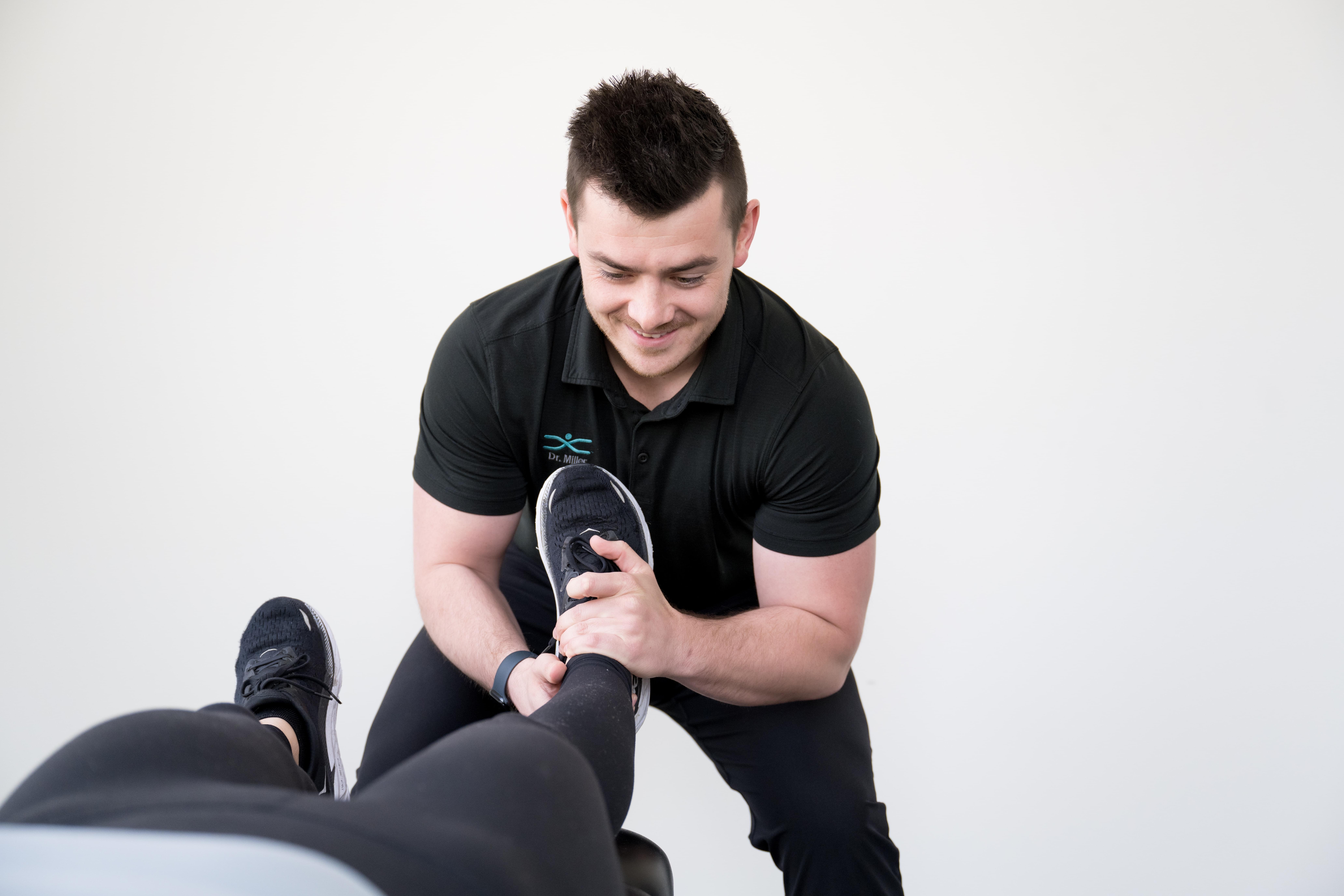
Ankle sprains are among the most common musculoskeletal injuries worldwide. Whether you’re a seasoned athlete, an occasional runner, or someone who simply stepped awkwardly on uneven ground, an ankle sprain can bring mobility to a halt. Sharp pain, swelling, bruising, and instability can make even simple activities feel impossible. But what many people don’t realize is that chiropractors are uniquely equipped to treat ankle sprains, and often help patients recover faster than they would with rest alone.
Using a combination of dry needling, massage therapy, chiropractic adjustments, and physical therapy–based rehabilitation, chiropractors address not only the pain, but also the underlying dysfunction that caused the injury. This comprehensive guide will walk you through what an ankle sprain really is, why proper treatment is critical, and how chiropractic care can support a complete and lasting recovery.
What Exactly Is an Ankle Sprain?
An ankle sprain occurs when one or more ligaments, strong bands of connective tissue that stabilize the ankle joint, are overstretched or torn. The most common type is a lateral ankle sprain, affecting the ligaments on the outside of the ankle. This usually happens when the foot rolls inward (inversion). Less common are medial sprains (inside of ankle) or high ankle sprains, which involve the ligaments connecting the tibia and fibula.
In case you are wondering if you have sprained your ankle, always consult with a doctor first to get a professional opinion. However if you are trying to find out of your own, ankles are a relatively vulnerable area of the body and can be sprained by several mechanisms, including: stepping on uneven ground, sudden changes in direction while running or playing sports, landing improperly from a jump, wearing unsupportive footwear or previous ankle injuries that never fully healed. Symptoms of a sprain include: sharp or throbbing pain, swelling and soreness, bruising, difficulty bearing weight, instability or a “wobbly” feeling or limited range of motion. Ignoring an ankle sprain can lead to chronic instability, recurrent sprains, tendon problems, and early osteoarthritis. That’s why proper evaluation and treatment are essential.
Many people associate chiropractors primarily with spine care, but in reality, chiropractors are highly trained in the musculoskeletal system: which includes every joint, muscle, tendon, and ligament in the body. Chiropractors can evaluate the severity of an ankle sprain, determine which tissues are injured, and create a tailored recovery plan.
The goal of chiropractic care is to reduce pain and inflammation, restore normal joint alignment, improve mobility, promote soft-tissue healing, strengthen the muscles that support the ankle and prevent future injuries. The combination of hands-on therapies (like dry needling and massage), joint adjustments, and targeted rehabilitation makes chiropractic care a powerful, holistic approach to ankle sprain recovery.
Let’s first discuss one of the most powerful treatments we offer here at IHS, and a valuable piece of the recovery puzzle when treating an ankle sprain: dry needling.
Dry needling is a modern, evidence-based technique that uses thin, sterile needles inserted into trigger points or tight muscle bands. Unlike acupuncture, which focuses on energy meridians, dry needling targets neuromuscular dysfunction.
An ankle sprain doesn’t only affect ligaments; it also causes surrounding muscles to tighten protectively. These tight muscles, particularly the peroneals, gastrocnemius, and tibialis posterior, can restrict mobility, alter gait mechanics, and slow healing.
Dry needling helps by: releasing tight, overworked muscles, reducing muscle spasms, increasing blood flow to injured tissues, decreasing pain and inflammation, improving ankle mobility and resetting neuromuscular activation patterns. Common trigger points treated in Ankle Sprain cases include: the peroneus longus and brevis (outside of leg), gastrocnemius and soleus (calf muscles), anterior tibialis (front of shin), and posterior tibialis (inside of leg). By calming muscle tension and promoting circulation, dry needling accelerates the healing process and prepares the ankle for rehabilitation exercises.
Now we move onto the second treatment we use following our dry needling, soft tissue massage therapy. Our doctors here at IHS use a combination of massage therapy techniques including ART, Graston and manual therapy. After an ankle sprain, the surrounding muscles, tendons, and fascia often become tight, inflamed, or restricted. Massage therapy is vital for restoring healthy soft-tissue function.
Types of massage therapy commonly used include: , deep tissue massage which targets deeper muscle layers, myofascial release which lloosens tight fascia to improve movement, lymphatic drainage which reduces swelling and inflammation and sports massage whichimproves circulation and tissue recovery.
Benefits of massage therapy for Ankle Sprains include: reduced swelling and stiffness, breaking up adhesions and scar tissue, improving circulation for faster healing, increasing range of motion, helping to restore normal gait mechanics and reducing compensatory tension in the hips and low back. Massage therapy is especially effective when combined with dry needling and chiropractic adjustments, as each therapy prepares the body for the next.
This leads us to our third treatment option, the chiropractic adjustment. A sprained ankle often leads to joint misalignment—not only in the ankle itself but also in the foot, knee, hip, and even lower back. When your body compensates for pain or altered foot mechanics, other joints absorb the stress.
Chiropractors use gentle, precise manipulations to restore normal motion and alignment in: the ankle joint, the subtalar joint, midfoot and forefoot joints, tibia and fibula, knee and hip, lumbar spine. Benefits of Chiropractic Adjustments for Ankle Sprains include: restored normal joint mobility, reduced pain and stiffness, improved weight-bearing symmetry, enhanced balance and proprioception and even helps prevent future sprains. A well-aligned ankle functions better, heals more efficiently, and is far less likely to reinjure.
The final treatment offered for this injury, and arguably the most important, is dynamic or functional rehabilitation. This is the portion of treatment that will return you to your normal everyday activities, and create a foundational strength that will not only get you back to where you were, but prevent future recurrence of a similar injury. Rehabilitation is arguably the most important part of recovering from an ankle sprain. Without proper strengthening and mobility work, the ankle remains weak and unstable, increasing the risk of re-injury.
Chiropractors often prescribe progressive rehabilitation programs designed to rebuild strength, restore balance, and retrain proper movement patterns. Key components of chiropractic rehabilitation include firstly, mobility exercises. The following exercises can help restore normal joint range of motion:, alphabet ankle movements, ankle circles, calf stretching and towel stretch for the Achilles tendon. Secondly, strengthening exercises. To stabilize the ankle, you need: resistance band eversion and inversion, calf raises (both straight and bent knee), toe and foot strengthening drills and hip and glute strengthening (important for lower-body stability). Next, you need Balance & Proprioception Training. This re-teaches your body how to sense joint position and react quickly including: single-leg stands, balance pad drillsand wobble board exercises and dynamic balance movements for athletes. Then we assess gait training. Correcting how you walk and run after injury prevents long-term problems in the knees, hips, and lower back. Lastly, you must finalize your return-to-Activity Conditioning. For athletes it is crucial that you address your: plyometrics, lateral cutting drills, jump-landing mechanics and sport-specific movement training. Chiropractors tailor your rehab plan to your activity level and recovery goals, ensuring that your ankle heals fully—not just enough to get by.
Ankle sprains are rarely simple. They often involve a combination of ligament damage, muscle guarding, joint misalignment, and neuromuscular dysfunction. Treating only one of these issues—such as rest and ice—may reduce pain temporarily, but the ankle remains weak and vulnerable.
A chiropractic approach is comprehensive, addressing every layer of the injury: Dry Needling to release muscle tension, reduce pain, and improve circulation. Massage Therapy, which restores soft-tissue health and reduces swelling. Chiropractic Adjustments, which corrects joint biomechanics and improves mobility. And finally, Rehabilitation Exercises, which strengthens the body, improves balance, and prevents future sprains. Together, these therapies provide a faster, more complete, and more durable recovery than passive care alone.
Many people try to “walk off” an ankle sprain, but doing so can lead to long-term complications, including: chronic ankle instability, recurrent sprains due to weak or stretched ligaments, poor proprioception, the ankle loses the ability to sense movement accurately., tendonitis or tendon tears (especially in the peroneal tendons), arthritis, misalignment and chronic inflammation can degrade cartilage, knee, hip, and low back pain and compensatory movement patterns can spread dysfunction to other joints. Proper chiropractic care can help prevent these issues by restoring full function early in the healing process.
A typical chiropractic visit for an ankle sprain may include: evaluation & diagnosis, range-of-motion testing, palpation of ligaments and tendons, gait and balance analysis, joint mobility assessments, initial treatment using pain reduction techniques, inflammation management, gentle mobilizations, dry needling or massage which releases muscle tension and improves circulation and prepares tissues for adjustments, chiropractic Adjustments, rehabilitation exercises including: strengthening, stretching, and balance training, education on activity modifications, home therapy instructions and footwear recommendations. Chiropractic care is individual, efficient, and designed to help you get back to your normal activities quickly and safely.
Healing times vary, but with chiropractic intervention: a mild sprain can be healed in 2–3 weeks, moderate sprains in 4–6 weeks and severe sprains in 8–12+ weeks. Chiropractors focus on restoring both the structure (joints, alignment, mobility) and function (muscles, movement patterns, proprioception) of the ankle, which often leads to faster recovery compared to rest alone.
Ankle sprains may be common, but they should never be ignored. A poorly healed sprain can lead to chronic instability, reduced performance, and long-term pain. Chiropractors offer a comprehensive treatment approach that includes: Dry needling to relax muscles and reduce pain, Massage therapy to promote soft-tissue healing, Chiropractic adjustments to restore proper joint function and Rehabilitation exercises to rebuild strength and stability. Whether you’re an athlete aiming to return to peak performance or someone who simply wants to walk pain-free, chiropractic care provides the tools for a safe, fast, and complete recovery.
Schedule your consultation or new patient visit with one of our highly skilled doctors today by calling the office at (317)-449-2020 or scheduling directly online here at ihsindy.com!
Content provided by Dr. Jordan Miller