
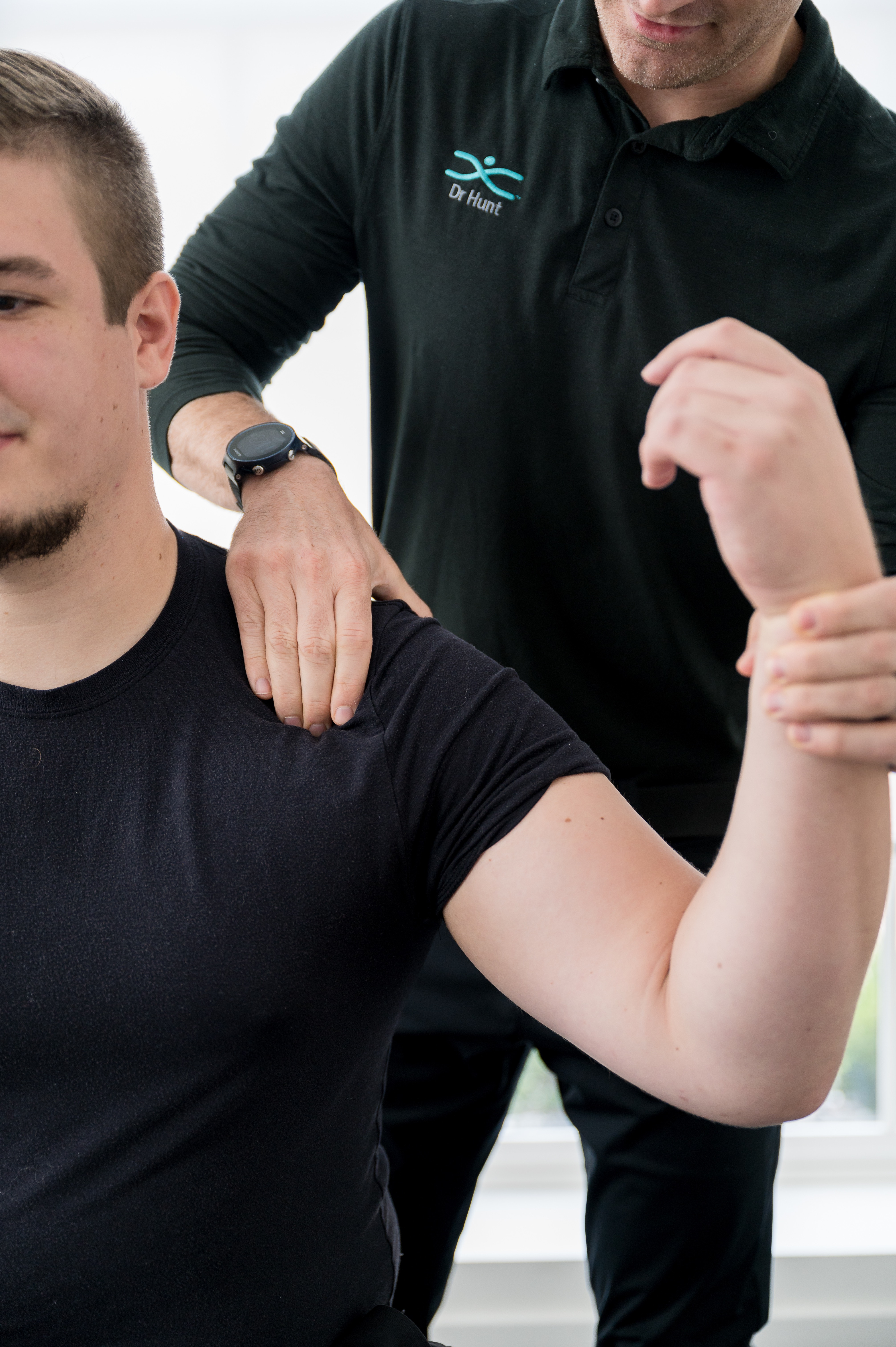
Summer takes normal people and makes them athletes.
One week you are walking after supper. The next week you’re trying an outdoor boot camp, adding weekend bike rides, doing yard work in the heat, and wondering why your back, knees, neck, calves, or shoulders suddenly have opinions.
That’s not to say summer fitness is bad. Often it means your body is required to adapt fast.
The problem isn’t always the workout. It’s the space between what the workout asks of your body and what your body is ready for. Heat, humidity, less rest, and a sudden increase of activity can even make a healthy lifestyle cause sore muscles, joints, and connective tissue. Sudden increases in training load have often been cited as a possible factor in injury risk within sports medicine.1
At Integrated Health Solutions, a chiropractic rehabilitation center serving Carmel, Fishers, and Indianapolis, we see active adults that are just doing too much, too soon, and with too little recovery.
So the better question is not, “Should I stop my exercise?” It is, “Am I adapting to this workout, or am I falling behind on recovery?”
Why You Might Be Surprised by Summer Workouts
Summer fitness motivation is a real thing. The days are longer now. Outdoor classes begin popping up. Friends invite you to ride, run, walk, hike, or play pickleball.
The problem is, motivation to do an activity is usually greater than the body’s tissue capacity to do it.
Your muscles, tendons, joints, and nervous system adapt to stress over time. If you go from two light workouts a week to four challenging outdoor workouts and a ride on the weekend, it can be an overload for your body.
You should expect some soreness after a new workout. But soreness should generally be improving. It’ll settle down. If your symptoms keep coming back, sticking around, travelling, or changing the way you move, that deserves more attention.
Summer Workout Mistakes Most Prone to Cause Pain
Mistake #1: Going too far, too quickly.
Someone joins a boot camp, adds running, tries cycling again, and decides THIS is the summer they finally “get serious.” Good intention. Ramping up risk
If the increase is slow, your body can usually adapt. But when frequency, intensity, and duration all increase at once, tissues may not have time to build tolerance.1 Muscles may tighten. You may have aching joints. Your low back may start to take over movements that should be happening in your hips.
This is where most chiropractic conversations about back pain start. Not because exercise is bad for the back but because the back often gets the bill when hips, core control, recovery, or training progression are not on par.
The second mistake: thinking sweat equals effectiveness.
To sweat can be to prove it. But more sweat doesn’t always mean better workouts. Your body is not simply exercising in hot weather. It also has temperature regulation. Heat and humidity produce exercise stress because your cardiovascular system and cooling mechanisms must work harder.2 Fatigue tends to increase, and movement quality often decreases.
The third mistake is not warming up and cooling down.
Warm-up prepares the body to move by gradually increasing circulation, which improves range of motion and coordination.3 Cool down helps the body downshift and gives you a moment to notice how you feel.
How Heat and Limited Recovery Increase Injury Risk
So here’s the real story behind the summer heat.
The workout is not the only stress. Heat is a stress factor. Humidity is a stress factor. Dehydration is a stressor. Poor sleep is a stressor. Stack enough stressors on top of each other, and a workout that looks good on paper can feel a lot harder in real life.
When you exercise in hot weather, your body has to work to support your working muscles and to regulate your body temperature.2 Losing fluid through sweat can affect how you feel and perform, especially during longer or hotter sessions.4
That’s because in July your normal speed can feel weirdly difficult; it’s not always because you got weaker. Occasionally the setting would be different.
Fatigue also alters your movement. As you tire, your body often finds shortcuts. It hardens one area to protect another. The motion comes from somewhere else. Symptoms may begin to present when the pattern repeats: tightness in your low back after class, stiff neck after cycling, cranky knees going up hills, calves that never loosen up, or shoulders that ache after upper body circuits.
Recovery is not time wasted. It’s a part of the training.
A workout gives your body a reason to change. And recovery gives it the chance. Sleep, hydration, nutrition, lighter days, and rest—all assist the body to repair and recalibrate. Recovery and workload balance are often highlighted as important considerations in performance and injury risk.5
If stretching helps for a bit, but the same tightness comes back every single workout, it’s not just a flexibility issue. It could be workload-related, recovery, strength, movement control, or irritation that your body continues to protect.
Signs of Overtraining: Soreness as a Warning Sign
Overtraining does not mean you had a hard workout. This means that training stress has continually outstripped recovery.
Overtraining is defined in sports medicine literature as a more chronic decline in performance due to a mismatch of training demand and recovery.6 Diagnosis can be difficult as the symptoms are similar to many other conditions, and therefore most patients should consider patterns rather than labels.
Normal soreness follows a predictable pattern. It can happen after a new or intense workout, reach a peak in a day or two, and then improve gradually. Overtraining symptoms tend to persist, recur, or appear with a drop in performance.
Common symptoms of overtraining include persistent muscle soreness, heavy legs, decreased endurance, decreased strength, poor sleep, irritability, low motivation, frequent aches in the same area, joint irritation, and workouts that feel harder than they should be.6
The pattern is important. That is different than normal post-workout soreness if your soreness never clears before the next class, if your low back tightens every time you run or cycle, or if effort is rising while performance is dropping.
The answer is usually not just to push through. Smarter training doesn’t always mean less training. Occasionally that means changing timing, intensity, movement selection, recovery days, or support work so that your body can actually adapt.
Signs of Overtraining in Cycling and Outdoor Cardio
In some ways, though, it is lower impact than running. Low impact doesn’t mean low demand.
Cycling requires your body to maintain a repeated position while your hips, knees, calves, feet, trunk, neck, and shoulders repeat the same movements over and over. Depending on training load, posture, bike fit, and recovery, cycling-related overuse symptoms can affect the low back, neck, knees, hips, calves, and feet.7
Now add in the Indiana summer heat and biking. A ride that felt doable in spring might feel different when the air is hot and the humidity is high. Your body is doing repetitive movement and temperature regulation.2
Cycling overtraining symptoms include neck tightness after rides, tightness in the upper back, low back ache, knee irritation when riding hills or at higher resistance, tight hips, tight calves, numbness or tingling in feet, and deteriorating ride performance.
Another common pattern is pain in the lower back. This pain can occur during the ride, after the ride, or later that night. It can be hip mobility, trunk endurance, saddle position, fatigue, or just doing too much mileage too quickly.
If the same ache keeps coming back after rides, this may be where someone is searching for a chiropractor for lower back pain.
The big question is about the pattern. Does the symptom occur only after long rides or hot rides or hills? Or is it coming up every time now?
Muscle and joint overtraining symptoms
Symptoms of muscle overtraining are not always dramatic. Occasionally they’re just pig-headed.
You stretch your calf, and it feels better. The next time you run it, it tightens up again. You foam roll your quads, and they open up for a second. Then the weight comes back.
Signs of muscle overtraining may include soreness that does not go away as quickly as expected, tightness that comes back quickly after stretching, cramping, heaviness, tenderness, loss of strength, or a feeling that the muscle is not responding normally.6 Normal muscle soreness should gradually improve. It shouldn’t just keep growing.
Muscles affect joints as well. Tired muscles may not be able to control the movement as well. A fatigued hip can alter knee mechanics. A tired trunk will add stress to the low back. Tight calves can influence ankle and foot mobility. Fatigued shoulders can cause the neck to work harder.
This is why joint pain can sometimes start out as a muscle recovery problem. Fatigue could alter movement control and increase compensation patterns during exercise.8
Pain that affects movement should be treated more seriously. Limping, twisting, bracing, shortening your stride, and avoiding one side or changing your form are all signs that you’re pushing through a workout that isn’t just ordinary soreness anymore. This is your body bargaining.
Tips for a Safer Summer Fitness
The object is not to scare you away from summer exercise. The aim is to help you stay active.
First, take baby steps. Make one change at a time. Adding more workout days doesn’t mean you have to drastically increase the intensity and duration that same week.
Second, warm up intentionally. If your class involves squats, lunges, jumping, pushing, or pulling, then your warm-up should include lighter versions of those kinds of movements.
Third, get ready for the heat. On hot, humid days the smarter workout may be shorter, earlier, later, slower, or indoors.
Warning signs of heat illness include headache, nausea, dizziness, weakness, irritability, heavy sweating, thirst, elevated body temperature, and reduced urination.9 If symptoms, including confusion, fainting, chest pain, severe weakness, or concerning heat-related symptoms occur, stop activity and seek appropriate medical care.
Fourth, hydrate before you need to. Hydration is not just something you do when you are working out. It begins before and finishes after.4
Fifth, weave recovery into your week. Alternate easy and hard days. Utilize lighter movement between harder sessions. Sleep. Eat plenty to fuel your activity.
And, finally, look for trends. Note the workout done, what was different, what was sore, how long it took, whether performance improved or declined, and if symptoms affected your form.
Normal – a little soreness after a new activity. Do not ignore sharp pain, worsening discomfort, numbness, tingling, weakness, radiating pain, dizziness, confusion, chest pain, or symptoms of heat illness.9
How Chiropractic Rehab Can Help You Heal and Perform
A movement check-in is more than “Where does it hurt?”
A thorough evaluation looks at the behavior of the painful area and what may be overloading it. This could include movement, strength, posture, control, balance, core stability, hip motion, shoulder motion, or coordination of basic movements in your body.
If you’re looking for a chiropractor in Carmel, a chiropractor in Carmel, IN, a Fishers chiropractor, or an Indianapolis chiropractor, the most important thing is to find care that is not only close by but also appropriate for your needs. It’s finding the care that addresses movement and recovery and function all together.
Treatment may include chiropractic care or adjustments when appropriate, soft tissue therapy, corrective exercise, mobility work, rehab progressions, and recovery strategies. Indeed, musculoskeletal care often combines manual therapy and exercise-based rehabilitation.10
Many musculoskeletal conditions benefit from a combination of symptom management and active movement strategies.
The goal isn’t to magically make all soreness disappear. The aim is to improve the way your body handles the stresses you are putting on it.
If you’re experiencing occasional low back tightness after outdoor workouts, it’s important to determine whether it’s related to hip mobility, trunk endurance, the selection of exercises, training load, or recovery habits. This is where a chiropractor for lower back pain might look beyond the painful spot and evaluate the system surrounding it.
If someone has neck pain after cycling, they might want to consider upper back mobility, shoulder tension, posture, bike position, and how fatigue affects form. That’s where a chiropractor for neck pain can help find patterns that are not apparent while riding.
Some patients also find us by searching broader injury terms such as “accident and injury chiropractor,” “auto injury chiropractor,” or “chiropractor after car accident.” Those are different scenarios than summer workout soreness, but the same principle applies: symptoms should be evaluated in context, and care should be tailored to the individual.
When to Consider a Movement Check-In
Not every ache means a trip to the doctor.
If you try a new workout and feel mild soreness for a day or two, that may just be your body adapting. But patterns that repeat themselves need more attention.
Consider scheduling a movement check-in if you experience the same pain every time you do a certain activity, if soreness lasts longer than you expect, if discomfort changes your form, if symptoms limit sleep or daily activity, if performance is dropping despite consistent effort, or if you feel numbness, tingling, weakness, or radiating pain.
A chiropractic rehabilitation center can help clarify what is happening mechanically. Sometimes the answer is simple: reduce load, improve recovery, adjust exercise selection, or build strength in a particular area.
If you are looking for a chiropractor in Carmel, Indiana; chiropractors in Fishers, Indiana; a chiropractor in Fishers, Indiana; a chiropractor in Fishers, IN; or a chiropractor in Fishers, the best next step is not always more intense. Occasionally it’s better information.
Train Smarter This Summer
Summer is a particularly good time to build strength, endurance, mobility, and confidence. The idea is not to avoid challenges. The idea is to build capacity without missing warning signs.
Your body will adjust to more activity if the progression is reasonable and the recovery is commensurate. But when heat, intensity, poor sleep, dehydration, and sudden increases in workload all occur together, soreness can shift from normal adaptation to a sign that something needs to change.
Overtraining symptoms aren’t a sign you failed. This is feedback.
If your summer workouts have resulted in more pain, tightness, or recurring symptoms than you’d expect, Integrated Health Solutions can help you look at how your body is moving, recovering, and tolerating activity.
Smart summer training. Book a movement check-in with us today.
References
- Gabbett, T. J. (2016). The training—injury prevention paradox. British Journal of Sports Medicine, 50(5), 273–280.
- Casa, D. J., et al. (2015). Exertional heat illnesses. Journal of Athletic Training, 50(9), 986–1000.
- Source needed. (Year). Warm-up preparation and injury-risk reduction in recreational exercise.
- Sawka, M. N., et al. (2007). Exercise and fluid replacement. Medicine & Science in Sports & Exercise, 39(2), 377–390.
- Source needed. (Year). Sleep, recovery, performance, and injury risk in active adults or athletes.
- Kreher, J. B., & Schwartz, J. B. (2012). Overtraining syndrome. Sports Health, 4(2), 128–138.
- Source needed. (Year). Cycling-related overuse symptoms, posture, and training load.
- Source needed. (Year). Fatigue, neuromuscular control, and movement compensation during exercise.
- Centers for Disease Control and Prevention. (2026). Heat-related illnesses.
- Source needed. (Year). Multimodal musculoskeletal care using manual therapy, exercise therapy, and education.
Content Provided By: Dr. Drew Sanders, D.C