
Summer is one of the busiest travel seasons of the year. Whether you’re heading to the lake, taking a family
vacation, or simply commuting to work, increased traffic means a greater likelihood of motor vehicle accidents
(MVAs). While some accidents result in obvious injuries requiring emergency care, many collisions appear
“minor” at first glance. Unfortunately, even low-speed accidents can place tremendous forces on the body,
resulting in injuries that may not become apparent until hours or even days later.
One of the biggest mistakes people make after a collision is assuming that they are “fine” simply because
they walked away from the accident. Adrenaline and other stress hormones released immediately after an
accident can temporarily mask pain, allowing injuries to go unnoticed until the body begins to calm down. This
is why early evaluation is so important—not only to identify injuries, but also to begin the recovery process
before pain and movement limitations become more persistent.
Common Delayed Symptoms After a Motor Vehicle Accident
Motor vehicle accidents can range from minor fender benders to life-altering collisions. Regardless of the
severity of the damage to the vehicle, the body experiences rapid acceleration and deceleration forces that can
strain muscles, ligaments, joints, discs, and nerves.
One of the most common injuries is whiplash, which occurs when the head is rapidly thrown forward and
backward. Whiplash is much more than simply neck pain—it can affect multiple structures throughout the neck,
upper back, shoulders, jaw, and even the nervous system. Research has shown that symptoms may include neck
pain, stiffness, headaches, dizziness, balance problems, sleep disturbances, cognitive complaints, and pain
radiating into the shoulders or arms.
Many people experience little discomfort immediately after the accident, only to wake up the following
morning with significant soreness or stiffness. Common delayed symptoms include:
- Neck pain and stiffness
- Upper trapezius muscle tightness
- Mid-back or lower back pain
- Headaches or migraines
- Shoulder pain
- Jaw discomfort (TMJ irritation)
- Numbness or tingling into the arms or legs
- Muscle spasms
- Difficulty turning the head
- Dizziness or balance disturbances
- Fatigue or difficulty concentrating
Some patients may also experience concussion-like symptoms such as light sensitivity, nausea, memory
difficulties, slowed thinking, or persistent headaches. These symptoms should never be ignored and warrant
prompt medical evaluation.
Why Early Evaluation Matters
Receiving an early evaluation after an accident serves several important purposes. First, it helps identify
injuries that may require immediate medical attention. Although many post-accident injuries involve muscles
and ligaments, more serious conditions—including fractures, spinal instability, disc injuries, internal injuries, or
concussion—must always be ruled out before conservative treatment begins. Second, early evaluation
establishes an accurate baseline of your symptoms and functional limitations. This allows your healthcare
provider to monitor your progress throughout recovery while ensuring your treatment plan is appropriately
individualized.
Current clinical guidelines also suggest that, once serious injuries have been ruled out, remaining active and
beginning guided rehabilitation is generally more beneficial than prolonged rest or immobilization. Early
movement and exercise have consistently been shown to improve pain, mobility, and long-term outcomes
following many whiplash injuries.
What to Expect During Your Initial Evaluation at Integrated Health
Solutions
At Integrated Health Solutions (IHS), every patient receives a comprehensive history and examination
before treatment begins. During your history, we discuss:
- Details of the accident
- Position in the vehicle
- Direction of impact
- Seatbelt use
- Airbag deployment
- Previous injuries
- Current symptoms
- Activities that aggravate or relieve pain
- Your physical examination may include:
- Range of motion testing
- Functional movement assessment using the Selective Functional Movement Assessment (SFMA) • Orthopedic testing
- Orthopedic testing
- Neurological examination
- Muscle strength testing
- Balance and coordination testing when appropriate
Depending on your presentation and the mechanism of injury, diagnostic imaging such as X-rays or MRI may
be recommended to evaluate for fractures, instability, disc injuries, or other structural concerns before
proceeding with treatment.
Understanding Insurance Options After an Accident
One question we hear frequently is: “Will my health insurance cover treatment after a car accident?” In most motor vehicle accident cases, treatment is typically billed through auto insurance rather than traditional health insurance.
At IHS, we generally recommend the following approach:
- MedPay (Medical Payments Coverage) – If your auto insurance policy includes MedPay, this is often the first option for covering treatment expenses regardless of who was at fault
- Attorney Representation – If additional care is needed or MedPay is unavailable, many patients choose to work with an attorney experienced in personal injury cases. This allows patients to focus on recovery while legal matters and insurance claims are managed appropriately.
- Self-Pay – When neither of the above options is available (or desired), treatment may also be provided on a self-pay basis. Every accident is different, and our team is happy to help explain the available options and answer questions regarding the treatment process.
Our Integrated Approach to Treating Motor Vehicle Injuries
No two accidents—and no two patients—are exactly alike. Because of this, treatment should never follow a “one-size-fits-all” approach. Current clinical guidelines support a multimodal treatment strategy, combining manual therapy, exercise, patient education, and active rehabilitation to improve pain and function.
Dry Needling (Medical Acupuncture)
Following an accident, muscles often become guarded and develop painful trigger points in an effort to
protect injured tissues. Dry needling uses thin, sterile filaments inserted into specific muscles to help decrease
muscle tension, reduce pain sensitivity, improve local circulation, and restore normal muscle function. While researchers continue to investigate its exact mechanisms, evidence suggests dry needling may influence both the local tissues and the nervous system, helping reduce muscle guarding and improve movement.
For many patients, dry needling serves as an excellent starting point before progressing into manual therapy and exercise.
Soft Tissue Therapy
Following dry needling, soft tissue therapy focuses on restoring normal tissue mobility. Depending on the patient’s presentation, treatment may include:
- Myofascial release
- Instrument-assisted soft tissue mobilization (IASTM)
- Trigger point therapy
- Muscle release techniques
These treatments help decrease muscle tension, improve tissue mobility, reduce discomfort, and prepare the body for more active rehabilitation.
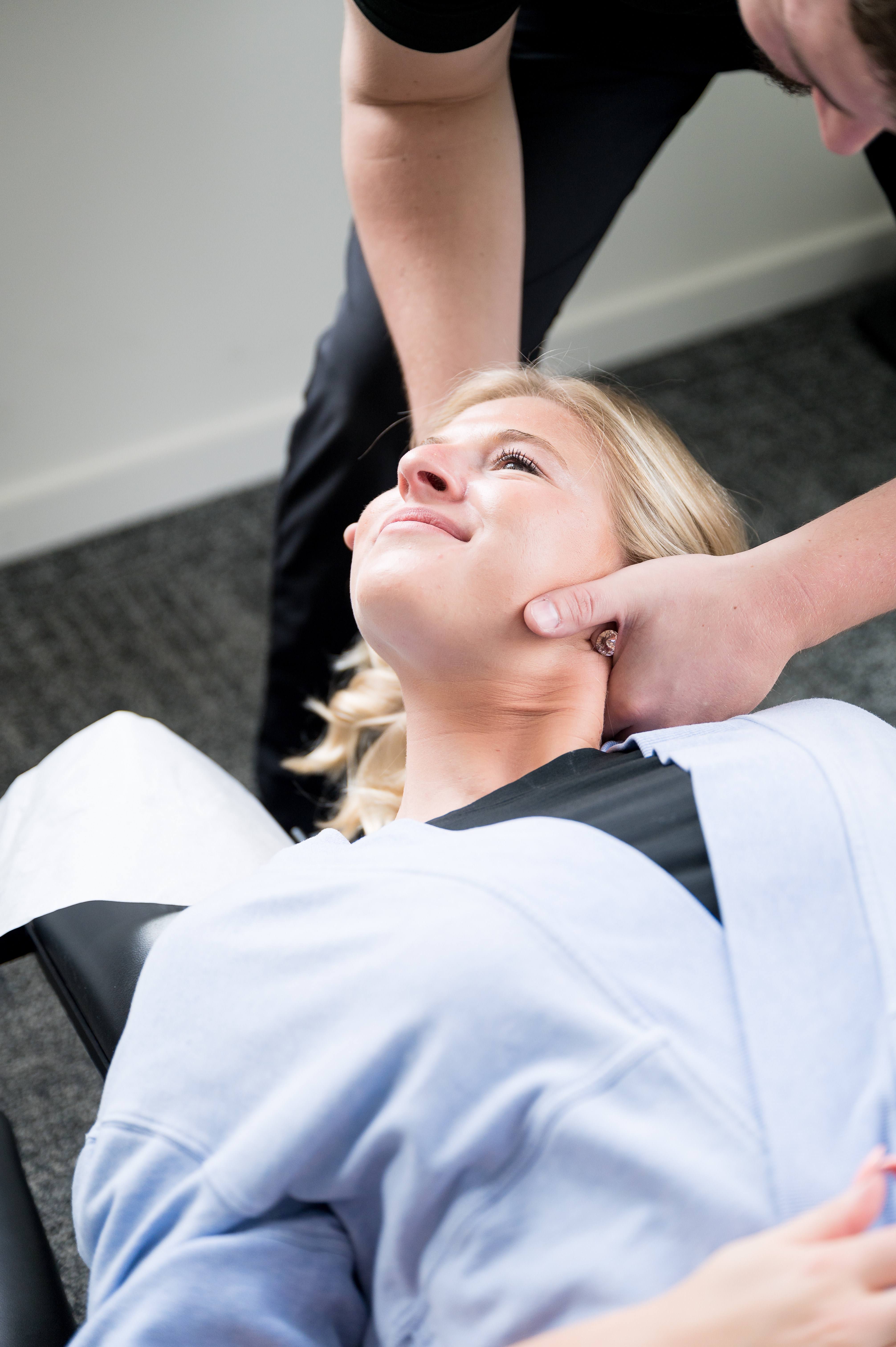
Chiropractic Adjustments
Following an accident, joints throughout the spine often become stiff due to inflammation, protective
muscle guarding, or altered movement patterns. Chiropractic adjustments are used to restore joint motion where
appropriate, helping improve mobility while reducing pain, stiffness, and inflammatory processes. They are
only performed after a thorough examination has ruled out contraindications or injuries requiring additional
medical management. Restoring normal movement is an important step in allowing patients to comfortably
return to daily activities.
Exercise Therapy: The Most Important Part of Recovery
Although hands-on treatments help reduce pain, they are only one piece of the rehabilitation process.
Exercise therapy is where long-term recovery truly begins. Once pain has been reduced and mobility has
improved, individualized exercises help restore:
- Muscle strength
- Coordination
- Balance
- Core stability
- Postural control
- Motor control
- Functional movement patterns
The ultimate goal is not simply to decrease pain, but to help patients confidently return to work, exercise,
recreational activities, and everyday life while reducing the likelihood of lingering dysfunction.
Red Flags to Watch For
Although soreness and stiffness are common following an accident, certain symptoms require immediate medical attention. Seek emergency evaluation if you experience:
- Loss of consciousness
- Progressive numbness or weakness
- Difficulty walking
- Loss of bowel or bladder control
- Severe or worsening headaches
- Persistent vomiting
- Slurred speech
- Confusion or increasing cognitive impairment
- Vision changes
- Chest pain or difficulty breathing
- Significant abdominal pain
- Unexplained swelling or deformity of a limb
These symptoms may indicate a more serious injury requiring emergency medical care.
The Bottom Line
Being involved in a motor vehicle accident can be physically and emotionally stressful. Even if your vehicle sustained only minor damage, your body may have experienced forces capable of producing significant soft tissue injuries.
The good news is that many patients recover well with timely evaluation, appropriate treatment, and an active rehabilitation program. Early assessment allows healthcare providers to rule out serious injuries while developing an individualized treatment plan designed to restore movement, decrease pain, and help you safely return to the activities you enjoy.
If you’ve recently been involved in a motor vehicle accident—even if your symptoms seem mild—it is worth having a thorough evaluation. Early care today may help prevent lingering pain and functional limitations tomorrow.
Content Provided By: Dr. Josh Monzel